The future of strategic planning
Dynamic Occupancy Planning
Occupancy planning has been broken for decades: a manual, annual scramble for a workforce that changes every week. Nobody built a tool that plans occupancy dynamically, end to end. Until now.

Industry leaders rely on HubStar














A new era of occupancy planning
Slow and manual before hybrid. Impossible since.
Occupancy planning hasn’t changed in decades. When work patterns were static, office hours were fixed and headcount was a reliable way to predict demand, once-a-year planning was sufficient.
That workplace no longer exists, and continuing to plan like it does isn’t neutral – it comes with a cost.
The utilization gap
Average utilization sits at 53%. Peak hits 80%. That gap means you're paying for space nobody uses on quiet days while people compete for desks on busy ones. Usually both, in the same building, in the same week.
Delayed decision making
No visibility into actual workplace demand means the answers to big portfolio questions, like consolidating a building or exiting a lease, take weeks to come up with. By then, the situation has changed.
Operational drag
Every reorganization means a manual restack from scratch. Planning teams spend months catching up as work patterns keep changing, leaving people sitting in the wrong buildings and separated from colleagues.
Expertise, wasted
Your best planners spend their time on data collection and spreadsheet maintenance - not on the strategic thinking that could drive better portfolio decisions, indentify savings, and make CRE a credible voice in the room.
One platform
From demand model to executed plan
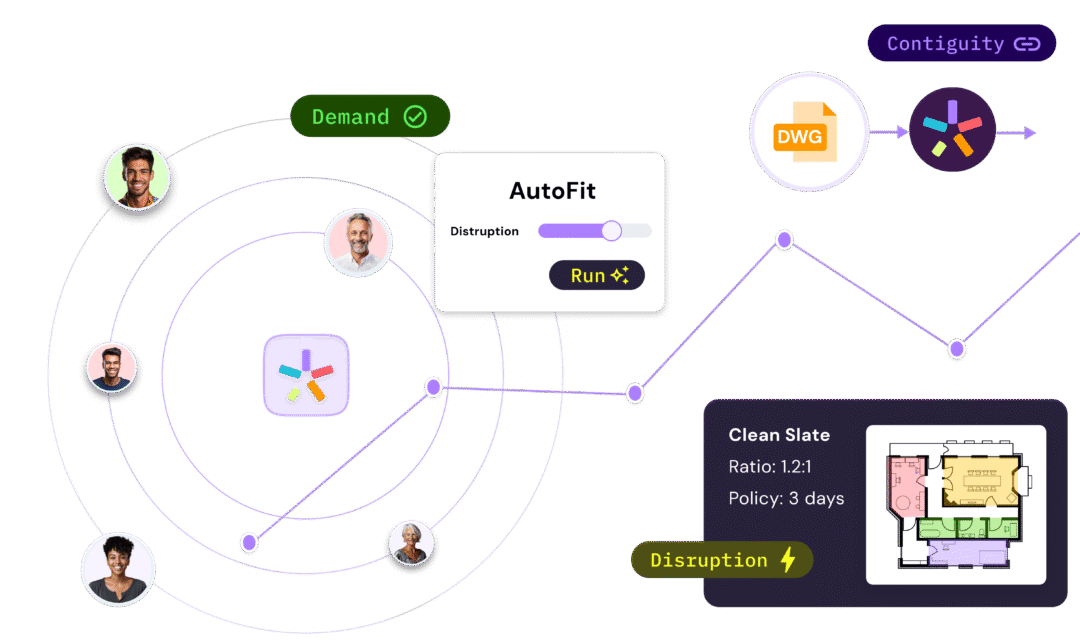
The only end-to-end strategic planning tool. Model demand → automate allocations → run scenarios → operationalize your plan.
Model Employee Demand
Replace manual, periodic forecasting with a living model of demand - from campus to team

Automate Stacking & Blocking
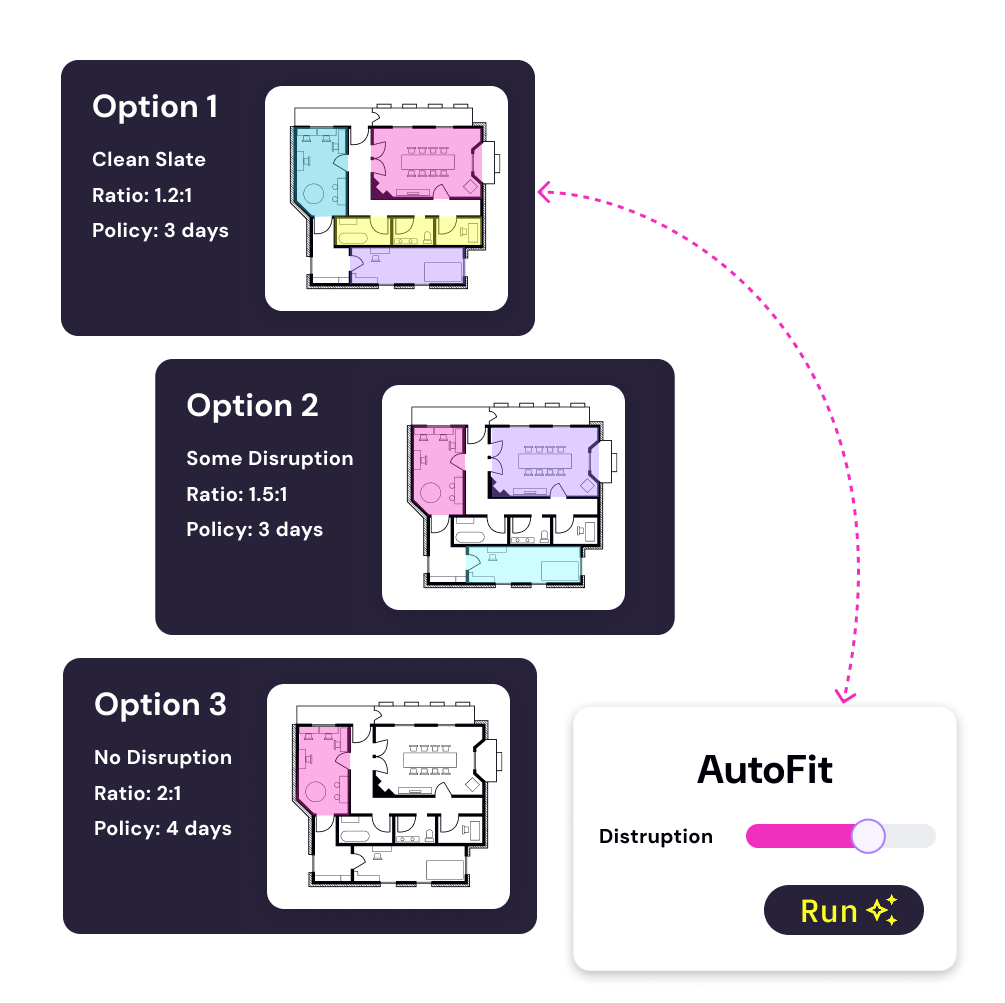
Fit employee demand straight to your floorplans and model scenarios in seconds
Allocate Space Intelligently
See how many spaces need to be allocated by BU and handle it all in a click

Simplify the complexity
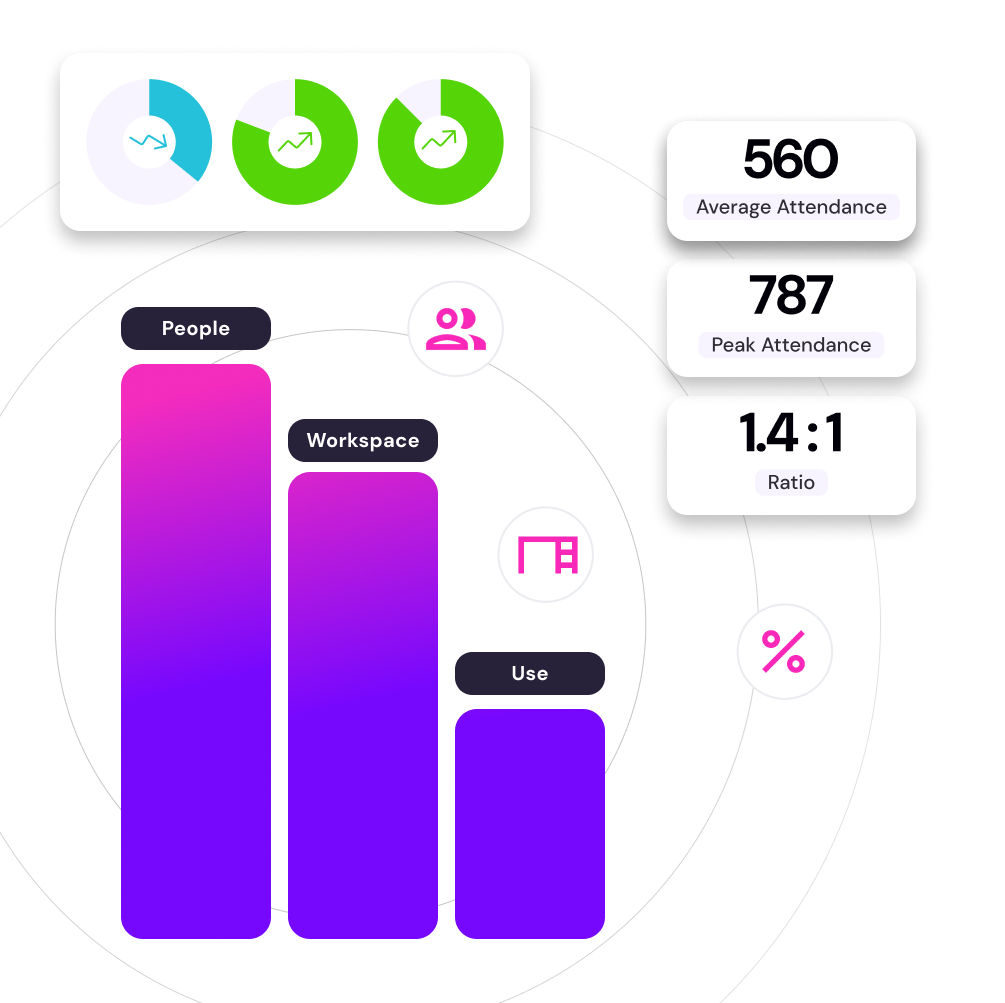
Space demand, supply & actuals in one view
For decades, space planners have dreamed of a better way to balance space supply with employee demand.
Before Dynamic Planning, getting a clear picture of how effectively your space is allocated meant manually stitching data together from siloed systems, maintained by different teams. By the time you’d figured it out, things had changed.
Dynamic Planning is the tool planners have been waiting for. It abstracts the complexity of hybrid work to a level that brings complete clarity, so you can:
- See demand, allocations and actuals – side by side – from campus to team level
- Tweak variables like policy days or sharing ratios to model the impact
- Make sure every planning meeting ends in a decision instead of a debrief
Go live with ease
Operationalize your plan
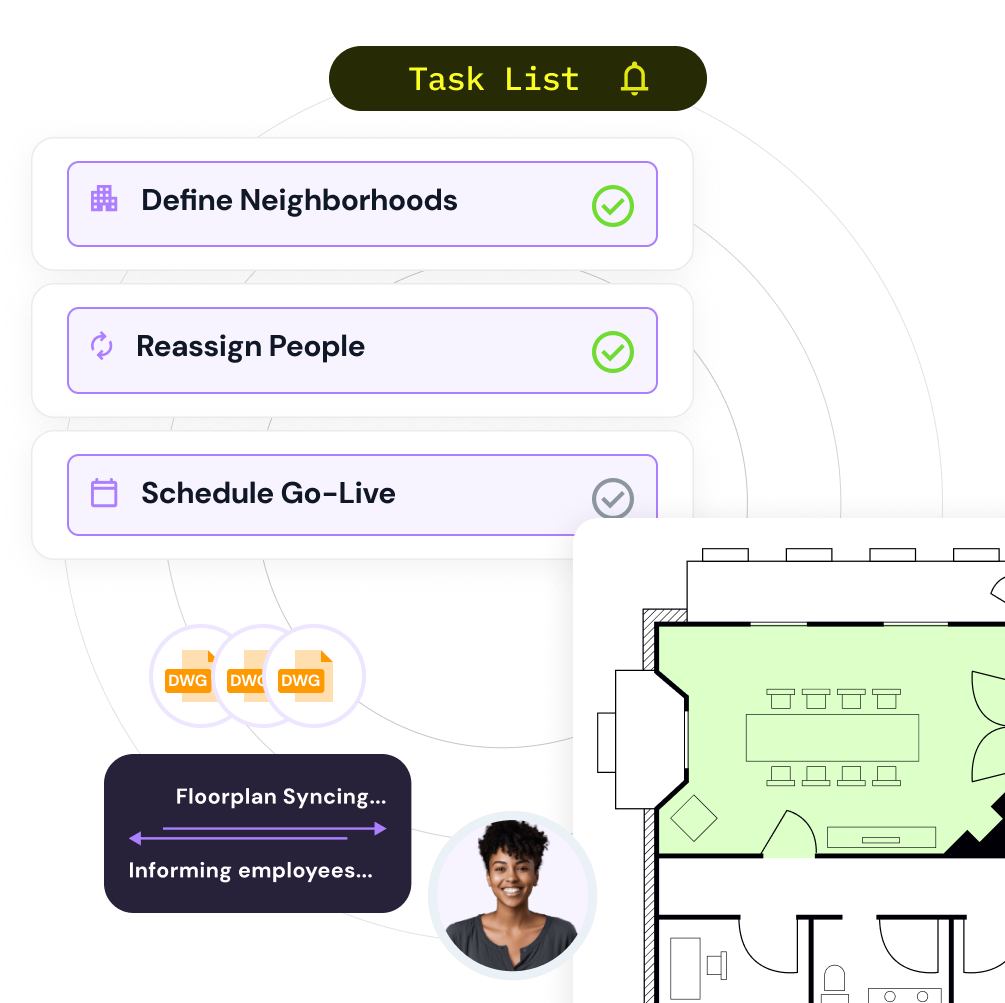
Typically, going live on a new space plan requires weeks of manual effort across systems and teams. Floor plans are updated in one tool, neighborhoods in another and assignments somewhere else. Change management is typically a separate project, with emails flying around so employees know where to show up.
Dynamic planning eliminates all that. It points you to everything you need to do to go live – and helps you do it – end-to-end.
- Floor plans are tidied and updated automatically
- Neighborhoods are auto-generated and displaced employees auto-assigned to the right spaces
- Employees always know where to go, no matter how frequently things change
For occupancy planners
From cost center to value creator
The best occupancy planners already know what good looks like. They know which constraints matter, which data to trust, and what a restack really means for the people affected. What they’ve lacked is a tool that matches their ambition.
Dynamic Planning removes the work that was consuming all the time – The BU data collection, the stacking passes, the manual cleanup after every reorg – and replaces it with a platform that handles the execution so you can focus on the thinking.
From tactical to strategic
The bottleneck used to be execution.
With Dynamic Planning, execution is rapid, so the work shifts to judgement: what questions to ask, what scenarios mean, what to recommend – and why. From tactical to strategic. From operational overhead to the person your CRE leader turns to when a major portfolio decisions needs to be right.
Stop rebuilding. Start deciding.
Model scenarios and present options, not just one answer built under pressure
Handle reorgs and lease events without starting from scratch
The strategic platform that matches what the role is actually capable of
Powering dynamic workplaces
Our customers' results speak for themselves
40 %
Portfolio reduction
Achieved by a Fortune 500 customer making data-backed consolidation decisions with HubStar
80 %
Less admin time
Maintaining floor plans with automated importing and publishing
50 %
Annual cost savings
From identifying and acting on space reduction opportunities
53 %
Fewer desks
By increasing space sharing ratios while improving workplace experience
What it means for your portfolio
Answer the big questions. Align stakeholders. Shed the tech noise.
The foundation
Start with the data. Everything else follows.
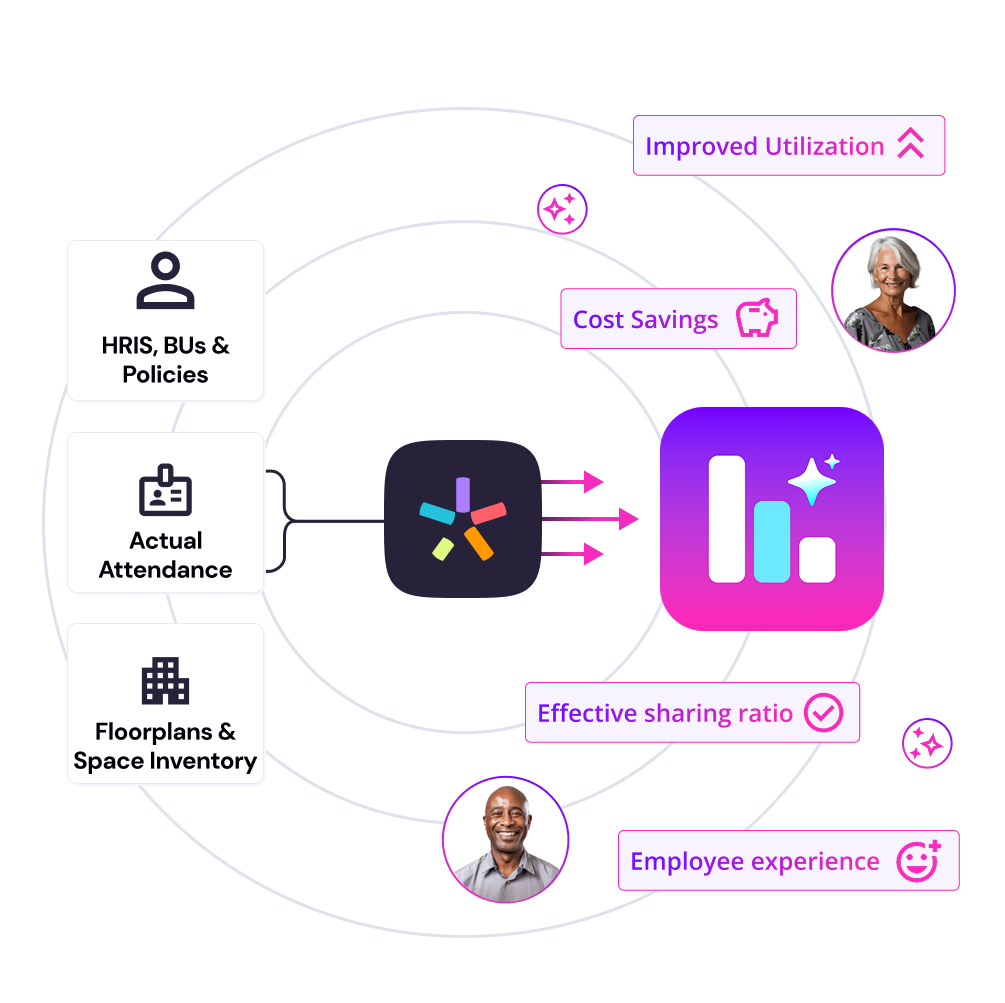
Dynamic Planning is only as good as the data underneath it. That foundation is what Hub provides: a complete, governed inventory of your space, people, business units and hybrid policies - with HRIS integration and floor plans that stay current automatically.
Build the foundation with Hub
Model demand with Flow
Plan, allocate and go live
Frequently asked questions
Dynamic Planning FAQs
Have a question that’s not answered here? Talk to our team.
What's the cost of not changing how we plan?
The utilization gap is the obvious place to start - average at 53%, peak at 80%, means paying for space nobody uses on quiet days while people compete for desks on busy ones.
But it goes further: portfolio decisions made on stale data, every reorg triggering a weeks-long manual restack, expert planners stuck in spreadsheet maintenance. None of it shows up as a line item. All of it has a real cost.
Do we need Hub before we can use Dynamic Planning?
Yes - Hub is the data foundation Dynamic Planning runs on. It provides the clean, unified space, people and policy data that makes demand modeling accurate. Hub also delivers real value on its own, and most customers see ROI from it before Dynamic Planning is switched on.
How does it handle reorgs or policy changes?
That's exactly what it's built for. When org structure changes, a new hybrid policy lands, or a lease event forces a restack, Dynamic Planning updates the demand model and lets you rerun the allocation immediately. No starting from scratch. This is where the time saving is most dramatic.
What's actually different about Dynamic Planning?
Most organizations plan periodically - once or twice a year, by hand. Dynamic Planning replaces that with a continous model that reflects how your workforce actually behaves. Same output (a space plan). Categorically different process, accuracy, speed, and ability to respond when things change.
Is this only relevant for large organizations?
Dynamic Planning is built for organizations with real planning complexity - typically 2,000+ employees across multiple floors or buildings. The problem compounds with scale: the more people, buildings, and business units, the more value the platform delivers.
What does this mean for our planning team?
The manual work - BU data collection, stacking passes, plan publishing - is automated. What remains is the strategic work: reviewing outputs, applying judgement, modeling scenarios, presenting to leadership. The job doesn't go away. It gets considerably better.
Ready to stop planning for a workplace that no longer exists?
See Dynamic Planning in a live walkthrough and deep-dive into your planning challenges.
Book a demo