Virtual Panel with Augusta University
Inside Augusta University’s Approach to Research Space Management
In this recap of HubStar's latest Connected Campus webinar, Augusta University's Director of Research Facilities Barbara Manley Smith shares how she built a systemic approach to managing research lab space from the ground up.

Jackie Towers
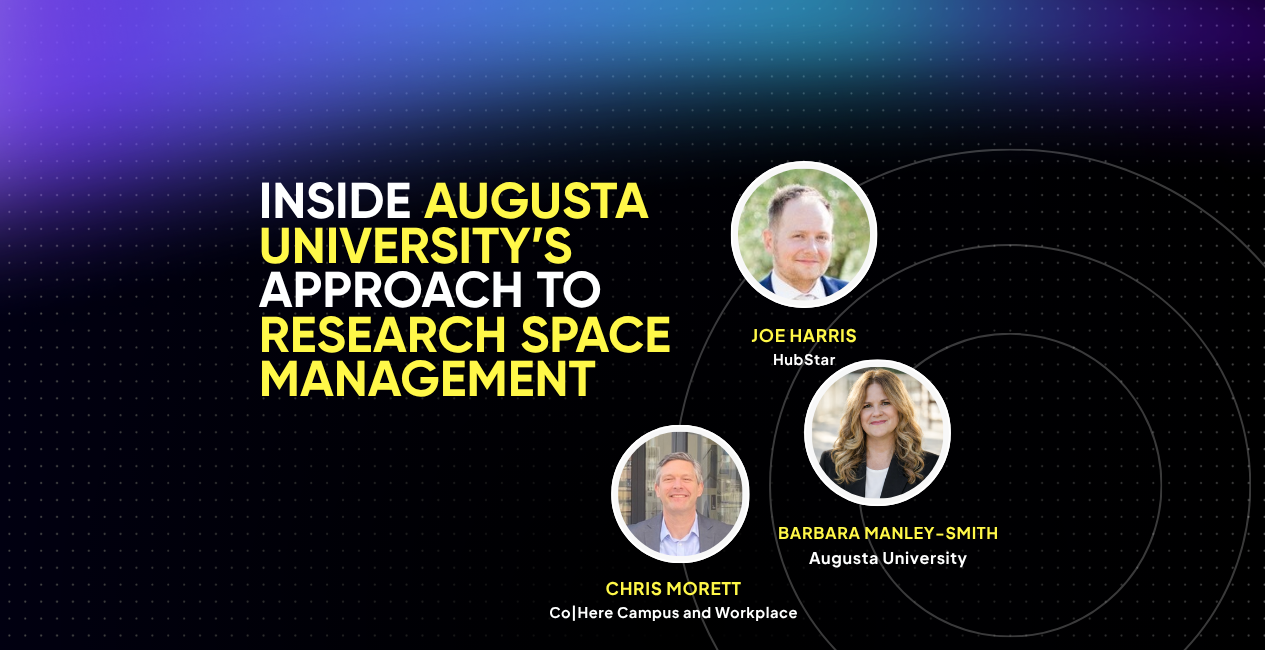
In the latest episode of HubStar’s Connected Campus webinar series, host Joe Harris and co-host Chris Morett of Cohere Campus and Workplace sat down with Barbara Manley Smith, Director of Research Facilities at Augusta University, to talk about research space management in higher education.
Augusta University enrolled 12,337 students and employed roughly 1,000 full-time faculty across its 670-acre campus in Fall 2025, a scale that makes allocating research space a genuinely complex, high-stakes problem.
Barbara has nearly 30 years of healthcare experience, spanning administration, clinical trial research, and facilities management, before moving to the university side five years ago.
Here’s what stood out to us most about her approach to managing research space.
Watch the Full Virtual Panel Recording Here
University research space is the most expensive but the least utilized. Why? Watch the full recording right here to find out and what Barbara and her team did to overcome this challenge.

Your institution probably needs a dedicated function for research space planning
When Barbara joined Augusta University, a dedicated function for research space management didn’t exist. Barbara spent her first four years as a one-person team, building a systemic approach to how research space gets allocated (she has help now). The lesson she and the panel returned to was that urgent issues never stop coming, so institutions have to choose to invest in long-term planning anyway, and that choice only sticks when someone owns it as their job.
Sharing lab space requires a culture shift, driven from the top
We’ve touched on this topic multiple times in the Connected Campus series, and this one is no different. Research space allocation is politically sensitive. While some research data and equipment stays confidential and proprietary, other space and equipment could realistically be shared, especially within the same department. Barbara, Joe, and Chris agreed that measuring utilization data and opening the conversation already has value on its own. Turning that data into departments actually handing over underused lab space requires a culture shift. That shift depends on support from the C-suite and executive leadership to drive it.
Use a core labs model to extend shared equipment to shared space
Augusta already runs a “core labs” model. Researchers can share high-tech lab equipment and technicians on a pay-to-use basis. The panel explored stretching that same logic further. For example, one research group leasing underused lab space from another, potentially funded through grant money, as an incentive to free up capacity. Even a modest gain like 10% can make a big dent financially. That math carries more weight against a backdrop of destabilized federal research funding in the US, which raises the stakes on how efficiently institutions use every square foot of lab space.
Watch the Full Panel Recording Here
Get more of Barbara's tips on shifting your institution's culture towards sharing research spaces, what surprised her most in the utilization data her team collected and much more.
Jackie Towers
Share this post
You might also like: