How to Optimize Space and Cut Costs with Occupancy Sensor Studies
Occupancy sensor studies are an easy and non-invasive way to get the data you need for strategic CRE decisions. In this post, HubStar's Global Support & Operations Director Jordan Williamson explains why.

Jordan Williamson

These days, real estate decisions come with high stakes and high price tags. Whether you’re considering expanding, consolidating, or redesigning office space, it’s key to understand how your space is actually being used.
That’s where short-term occupancy sensor studies come in.
These studies provide real-time space utilization data over three, six, or nine months, giving workplace teams the insight needed to make cost-effective decisions with confidence.
HubStar’s occupancy sensors are peel-and-stick, easy to install, and non-invasive, making them ideal for fast, facility-friendly deployments across your entire portfolio.
Download the Hybrid Occupancy Index 2025 - 2026
See what occupancy data from HubStar customers across 13 countries, 173 office buildings and 300 million square feet of space says about how spaces are actually being used globally.
Here’s how short-term occupancy studies can help you cut costs, improve space utilization, and earn the commute with data-backed decisions.
1) Use Real-Time Data to Reduce Real Estate Spend.
Most real estate portfolios include at least one floor, area, or entire building that’s underutilized, but it’s hard to justify making changes without data.
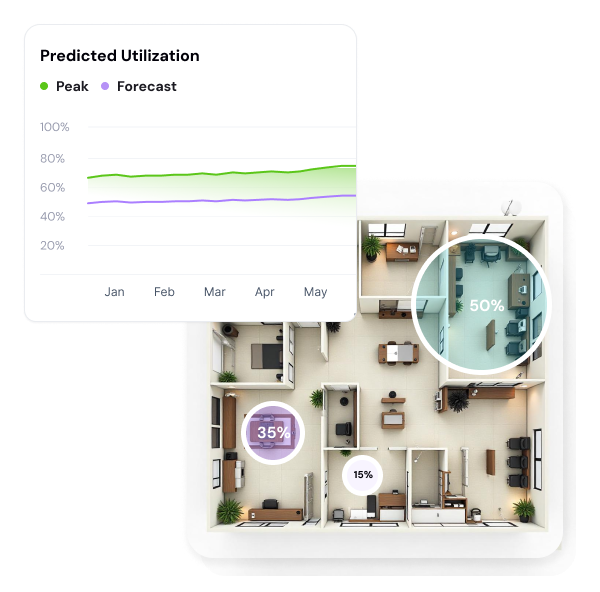
Occupancy sensor studies track how desks, meeting rooms, and shared spaces are actually used. You’ll quickly uncover:
- Spaces that are consistently vacant or low-traffic
- Opportunities to consolidate without disrupting teams
- Areas that are overused and need redesign
By aligning workplace design with actual usage patterns, companies regularly find opportunities to decrease square footage and reduce leasing costs.
2) Improve Employee Experience Through Smarter Layouts.
A well-designed workplace doesn’t just save money — it supports how people want to work.
Studies can identify whether employees are favoring open collaboration zones over private offices, which areas see the most foot traffic, and whether desks are actually being used in line with booking activity.
This kind of insight allows you to reallocate space in a way that supports productivity, wellbeing, and satisfaction, helping your workplace earn the commute and increase in-office engagement.
4 Data-Driven Hybrid Office Design Tips for 2026
Hybrid office design can make or break everything from attendance levels to retention. With so many design options, what's the right way to do it?

3) Plan Future Spaces with Confidence and Flexibility.
Short-term studies help you audit your current footprint and plan your next move.
If you’re relocating offices, undergoing renovations, or exploring hybrid working models, a pre-move occupancy study gives you the baseline you need to right-size the next space.
And because HubStar’s sensors are non-invasive and easily movable, they can be redeployed across multiple floors, locations, or even time periods — maximizing value and minimizing complexity.
The Takeaway
Short-term occupancy sensor studies give you the confidence to move fast, spend smarter, and create better experiences for your people.
Unlike traditional solutions, HubStar occupancy sensors are easy to deploy, non-disruptive, and built for flexibility, so you can make informed decisions without overhauling your entire tech stack.
With insights on space efficiency, common area usage, and occupancy trends, you’ll be ready to make recommendations that impact cost, experience, and productivity.
Start Measuring What Matters
Ready to uncover the true potential of your office space? See how HubStar can help you turn sensor data into strategy.
Jordan Williamson
Share this post