Book a demo Login
Workplace Resources Webinars Case Studies Guides Blog Podcast

World Cup Workplace Planning

How to Plan Office Attendance Around World Cup Finals Week

The World Cup finals is a useful reminder that office attendance is shaped by real-world events, not just policy. Here’s how workplace leaders can plan for shifting demand, weekday fixtures, and changing attendance patterns without overreacting.

4 min read 4 July 2026

Hannah Cresswell

Space-utilization-metrics-use-this-as-the-template-

The World Cup finals are nearly here, which means the tournament is no longer happening politely in the background.


The group stage is nearly done. The knockouts are moving fast. And we are now approaching the fixtures that even casual fans start paying attention to. For workplace leaders, the most important matches are not just the biggest ones. They are the ones that collide with the working week.


UKG research of 8,000 employees across eight countries found that:


  • 37% of workers planned to change their schedules during the tournament
  • 27% expected to miss work by arriving late, leaving early, or taking time off.


It creates a practical planning question: Not “will football affect attendance?” But: "Where, when, and by how much?"

Major public events rarely create one neat attendance drop. They change the shape of demand. Some employees leave early. Some arrive late the next day. Some work remotely to avoid commute disruption. Some come into the office because it puts them closer to colleagues, clients, or city-centre screenings at the pub.


HR Dive has reported that employers in host cities should expect commuting delays and may need to revisit remote work and schedule flexibility during the tournament. So yes, many organisations may see a World Cup attendance dip during finals week.


But the smartest response is not to guess, mandate, or overcorrect. It is to plan for variable demand.


Why finals week changes attendance patterns

The later stages of the World Cup matter because more people start paying attention. Even casual fans who skipped the group stage may tune in for quarter-finals, semi-finals, and the final. If their country is still in the tournament, interest gets sharper.


The workday impact is not limited to match time either. A weekday fixture can mean people leaving work early, avoiding the commute, switching their office day, or showing up tired the next morning after a late finish, extra-time drama, or penalties.


There is also late uncertainty. Workplace teams can flag the high-risk dates now, but they may not know which countries, offices, teams, or employee groups will be most affected until only a few days before. That is why static attendance assumptions break down.


That does not mean every office should expect empty floors. It means attendance becomes more dynamic than usual, especially if your workplace includes host-city offices, long commutes, hybrid teams, big groups of football fans, or that one person who has somehow watched every match since the opening game.

 

frieds-cheering-sport-at-bar-together-2026-03-19-04-04-15-utc-scaled
Some come into the office because it puts them closer to colleagues, clients, or city-centre screenings at the pub.

The real risk is planning around assumptions

A lot of organisations still respond to events like this with broad policy messages. They tell people to come in anyway. They quietly assume fewer people will show up and scale down the office experience. Or they leave decisions entirely to managers, which can create different expectations across different teams.


But these approaches miss the point.


A World Cup match does not just reduce attendance. It changes the pattern of attendance. Some teams may move their in-person days around specific fixtures. Some people may work remotely because travel feels like more effort than it is worth. Others may choose to come in because the office gives them a better shared experience than home, or because being in the city makes it easier to watch the match with colleagues afterwards.


That is why purposeful attendance matters. If employees are already weighing whether the office is worth the commute, a major sporting event raises the bar. The workplace has to offer clarity, coordination, and a reason to be there.


What workplace leaders should do instead

1. Identify the highest-risk days

Start with the dates you already know. Some of the biggest attendance risks are not just matches during working hours. They are late finishes that affect the next morning, especially when extra time, penalties, travel, or post-match plans are involved.


According to the official FIFA match schedule, these are the upcoming fixtures most likely to affect office attendance, commute patterns, and next-day behaviour:


Date Fixture BST ET
Monday 6 July Mexico vs England 1am Sunday 5 July, 8pm
Monday 6 July Portugal vs Spain 8pm 3pm
Tuesday 7 July USA vs Belgium 1am Monday 6 July, 8pm
Tuesday 7 July Round of 16, TBD 5pm 12pm
Tuesday 7 July Round of 16, TBD 9pm 4pm
Thursday 9 July Quarter-final, TBD 9pm 4pm
Friday 10 July Quarter-final, TBD 8pm 3pm
Tuesday 14 July Semi-final, TBD 8pm 3pm
Wednesday 15 July Semi-final, TBD 8pm 3pm
Sunday 19 July Final, TBD 8pm 3pm


Then layer in your own context:


  • Which offices are in host cities?
  • Which employee groups are most likely to follow the remaining teams?
  • Which sites already have uneven attendance?
  • Which functions need reliable on-site coverage?
  • Which locations are most exposed to transport disruption?


This turns a vague cultural moment into a manageable planning window. You are not trying to predict every behaviour perfectly. You are trying to identify where demand is most likely to shift.


2. Compare expected attendance with actual behaviour

The useful question is not whether attendance drops in general. It is whether specific sites, teams, floors, or days start behaving differently from normal.


If a team was expected onsite on Wednesday but attendance drops sharply after a Tuesday semi-final, that tells you something. If one office stays stable while another shifts dramatically, that tells you something too. If social spaces fill up while desk areas stay quiet, that is also useful.


This is where comparing expected versus actual attendance matters. It helps workplace teams understand whether their plans still match how people actually use the office. That matters because a one-week event can expose bigger gaps in your hybrid work planning: teams coming in on different days than expected, offices being busier or quieter than planned, or collaboration spaces carrying more demand than desk areas.


The World Cup is not just an attendance anomaly. It is a quick way to see whether your workplace strategy can respond to real behaviour, not just policy.


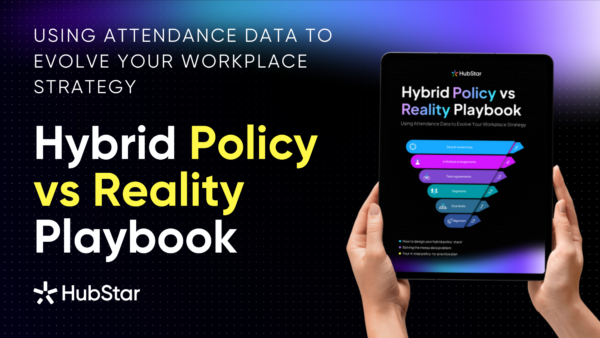
Read the Hybrid Policy vs Reality Playbook

World Cup finals week is a useful test case. If attendance shifts quickly, can you see where your hybrid policy, team expectations, and actual office use stop lining up?
3. Give people a clearer reason to come in

If attendance dips because the office offers no distinct value on a high-distraction day, that is not really a World Cup problem. It is an experience problem.


For finals week, workplace teams should think carefully about which days are genuinely worth promoting as in-person days. That might mean moving collaboration-heavy sessions away from likely disruption windows. It might mean planning team moments around the office rather than pretending nothing is happening. It might mean giving employees clearer visibility of who else will be in before they make the trip.


The principle is simple: when demand becomes more selective, the workplace experience needs to become more intentional. That does not mean every office needs a fan zone, big screen, or themed cupcakes! It means people should understand why the office is worth using that day


4. Plan for volatility, not just lower numbers

Some leaders hear “attendance dip” and immediately think about empty desks. But the more useful operational question is whether demand becomes uneven.


One site may run quiet while another sees higher occupancy because teams decide to gather. One floor may feel underused while meeting rooms and social spaces get busier. One business unit may stay stable while another shifts sharply. A host-city office may face commute disruption that has very little to do with employee engagement or workplace policy.


That is why workplace analytics matter. They help teams understand variation by day, location, and space type. Instead of treating finals week as a one-off disruption, workplace leaders can use it as a live test of whether their space planning reflects real demand.


The point is not to build the office around football. The point is to build a dynamic workplace strategy that can handle demand changing quickly.


Are you measuring the right workplace signals?

Finals week can expose more than an attendance dip. It can show whether your workplace metrics are helping you understand real demand or just reporting averages after the fact.
5. Avoid one-off policy reactions

Major events often tempt organisations into temporary hard-line rules. But rigid one-off rules can create more friction than stability, especially in hybrid environments where employees already expect some flexibility. They can also turn a planning issue into a compliance issue.


A better response is a short planning playbook:


  • Confirm which teams need on-site coverage
  • Communicate flexibility boundaries clearly
  • Promote high-value in-person activity on likely disruption days
  • Monitor attendance, commute, and space-use signals during the week
  • Review what actually happened once the tournament ends


That approach fits the reality of hybrid work far better than treating every attendance shift as a problem to control.

A World Cup attendance dip is not the real problem

World Cup finals week will be over quickly. The planning lesson will last longer. Because the real issue is not football. It is how easily office demand can shift when real life gets in the way of the plan.


If attendance changes next week, will you know where it changed?

  • Will you know which teams were affected?
  • Will you know whether desks were quiet but collaboration spaces were busy?
  • Will you know whether people stayed home because they wanted flexibility, avoided travel, or simply had no strong reason to come in?


That is the difference between seeing an attendance dip and understanding one.


World Cup finals week is a useful stress test because it makes the invisible visible. It shows whether your workplace strategy can absorb temporary demand swings without confusion, overcapacity, or a poor employee experience.


The goal is not to control every variation. It is to spot change early, understand what is driving it, and plan the workplace around evidence rather than instinct.

Hannah Cresswell

4 min read 4 July 2026

Share this post

Dynamic Workplace Strategy hybrid optimization office attendance

"HubStar enabled us to save millions in operating costs while not only avoiding disruption, but improving employee experience."

Fortune 500

Global Real Estate Lead @ Fortune 500 Company

"We will not make any meaningful real estate and workplace decisions without HubStar data."

Fortune 500

Global Real Estate Lead @ Fortune 500 Company

"HubStar allows us to see how space is being used and occupied, and helps us predict the space we’ll need going forward."

donna-porter

Donna Porter

Senior Space Manager @ Sheffield Hallam University

"Team were very happy! Implementation was great. We were up and running in days."

gavel_88dp_FFFFFF

Law Practice

"Perfect fit. The application works very well, and the support given has been exceptional. This was originally required for desk booking, but the business quickly took to the system and have been requesting further functionality since."

oil_barrel_300dp_FFFFFF

Application Analyst @ Oil & Energy Company

"Brilliant solution for managing office space. We've been able to be proactive and intentional about making our office space work."

5-3

Commercial Director @ Technology & Services Company

"Would 100% recommended. Our account manager is by far the best and most approachable person I've met on any contract I've worked on. Nothings is too much. They always have the answer and help make the changes we need and want. Having this type of customer service really makes a difference."

groups_300dp_FFFFFF

Facilities Manager @ Civic & Social Organization

"Support response and attention to detail is exceptional. Highly recommend as very good value for the investment. Staff find it easy to use and integration to Microsoft Outlook is great. Support is excellent."

volunteer_activism_300dp_FFFFFF

ICT Manager @ Nonprofit Organization

"What we've found most useful is the ability to customise the system to suit our needs. The rules and policy engine have allowed us to build in desk and room booking processes to communicate well with our team, and manage the space in our building."

5-3

Commercial Director @ Technology & Services Company

"The standout features are it’s clean and simple interface, ability to integrate with Outlook and the simple way it can be deployed to the display screens outside our rooms, not to mention the high level of support that’s provided with the product."

AEU

Evan Henderson

IT Officer @ AEU Victoria

"User-friendly interface, real-time reservations, and effective resource management improve productivity and space use. I use it everyday."

engineering_300dp_FFFFFF

Civil Engineering Company

"Very adaptable, highly featured and easy to use. I like the ability to address our very detailed requirements in a quick implementation with a modern, attractive user interface."

diamond_300dp_FFFFFF

Luxury Goods & Jewellery Company

"My favourite feature is the Outlook integration, as it enables our staff to book meetings in a familiar way. The bookings are automatically transferred without any extra steps for the end user."

AEU

Evan Henderson

IT Officer @ AEU Victoria

"The system was so intuitive, we really didn’t need to give people a lot of training."

Russell-Group

Jeremy Wilson

Operations Manager @ Russell Group University

"The reporting has been brilliant."

Russell-Group

Jeremy Wilson

Operations Manager @ Russell Group University

"Employees need to be able to collaborate closely, working in one room. The office environment needs to align with this seamlessly. What that means for us is that we need to measure usage and occupancy rates and adjust the workspaces accordingly as needed."

Mark-van-Rijt

Mark van Rijt

Managing Director of Facility Management @ ABN AMRO Bank

"HubStar has removed so much admin from my daily to-do list. These days I only spend about an hour a week, covering six offices and 800 staff members. Before I was spending an hour a day messaging people back and forth! This means the system has cut the time I have to spend on managing bookings by 80%."

tristan-drinkwater

Tristan Drinkwater

Facilities & IT Services Manager @ Exertis

"There’s a tremendous range of reports that we use to measure capacity levels."

Russell-Group

Jeremy Wilson

Operations Manager @ Russell Group University

"HubStar allows us to see how space is being used and occupied, and helps us predict the space we’ll need going forward."

donna-porter

Donna Porter

Senior Space Manager @ Sheffield Hallam University

"The experience that users now have using HubStar is absolutely fantastic. The implementation went smoothly and our staff find the system really easy to use. The support I’ve had is phenomenal - incredibly knowledgeable about the product and so helpful. They’re second to none"

tristan-drinkwater

Tristan Drinkwater

Facilities & IT Services Manager @ Exertis

"With the single push of a button, my team gains insight into spaces that are consistently underutilised and how many ‘no-shows’ have taken place"

wur-350x350-1

Fred Jonker

Information Services Policy Officer @ Wageningen University & Research

"I’d absolutely recommend HubStar. If someone asked me why, I’d say it simply does everything you need it to do. The feature set is rich and covers all the requirements that most organisations are likely to have."

tristan-drinkwater

Tristan Drinkwater

Facilities & IT Services Manager @ Exertis

"HubStar enabled us to save millions in operating costs while not only avoiding disruption, but improving employee experience."

Fortune 500

Global Real Estate Lead @ Fortune 500 Company

"We will not make any meaningful real estate and workplace decisions without HubStar data."

Fortune 500

Global Real Estate Lead @ Fortune 500 Company

"HubStar allows us to see how space is being used and occupied, and helps us predict the space we’ll need going forward."

donna-porter

Donna Porter

Senior Space Manager @ Sheffield Hallam University

"Team were very happy! Implementation was great. We were up and running in days."

gavel_88dp_FFFFFF

Law Practice

"Perfect fit. The application works very well, and the support given has been exceptional. This was originally required for desk booking, but the business quickly took to the system and have been requesting further functionality since."

oil_barrel_300dp_FFFFFF

Application Analyst @ Oil & Energy Company

"Brilliant solution for managing office space. We've been able to be proactive and intentional about making our office space work."

5-3

Commercial Director @ Technology & Services Company

"Would 100% recommended. Our account manager is by far the best and most approachable person I've met on any contract I've worked on. Nothings is too much. They always have the answer and help make the changes we need and want. Having this type of customer service really makes a difference."

groups_300dp_FFFFFF

Facilities Manager @ Civic & Social Organization

"Support response and attention to detail is exceptional. Highly recommend as very good value for the investment. Staff find it easy to use and integration to Microsoft Outlook is great. Support is excellent."

volunteer_activism_300dp_FFFFFF

ICT Manager @ Nonprofit Organization

"What we've found most useful is the ability to customise the system to suit our needs. The rules and policy engine have allowed us to build in desk and room booking processes to communicate well with our team, and manage the space in our building."

5-3

Commercial Director @ Technology & Services Company

"The standout features are it’s clean and simple interface, ability to integrate with Outlook and the simple way it can be deployed to the display screens outside our rooms, not to mention the high level of support that’s provided with the product."

AEU

Evan Henderson

IT Officer @ AEU Victoria

"User-friendly interface, real-time reservations, and effective resource management improve productivity and space use. I use it everyday."

engineering_300dp_FFFFFF

Civil Engineering Company

"Very adaptable, highly featured and easy to use. I like the ability to address our very detailed requirements in a quick implementation with a modern, attractive user interface."

diamond_300dp_FFFFFF

Luxury Goods & Jewellery Company

"My favourite feature is the Outlook integration, as it enables our staff to book meetings in a familiar way. The bookings are automatically transferred without any extra steps for the end user."

AEU

Evan Henderson

IT Officer @ AEU Victoria

"The system was so intuitive, we really didn’t need to give people a lot of training."

Russell-Group

Jeremy Wilson

Operations Manager @ Russell Group University

"The reporting has been brilliant."

Russell-Group

Jeremy Wilson

Operations Manager @ Russell Group University

"Employees need to be able to collaborate closely, working in one room. The office environment needs to align with this seamlessly. What that means for us is that we need to measure usage and occupancy rates and adjust the workspaces accordingly as needed."

Mark-van-Rijt

Mark van Rijt

Managing Director of Facility Management @ ABN AMRO Bank

"HubStar has removed so much admin from my daily to-do list. These days I only spend about an hour a week, covering six offices and 800 staff members. Before I was spending an hour a day messaging people back and forth! This means the system has cut the time I have to spend on managing bookings by 80%."

tristan-drinkwater

Tristan Drinkwater

Facilities & IT Services Manager @ Exertis

"There’s a tremendous range of reports that we use to measure capacity levels."

Russell-Group

Jeremy Wilson

Operations Manager @ Russell Group University

"HubStar allows us to see how space is being used and occupied, and helps us predict the space we’ll need going forward."

donna-porter

Donna Porter

Senior Space Manager @ Sheffield Hallam University

"The experience that users now have using HubStar is absolutely fantastic. The implementation went smoothly and our staff find the system really easy to use. The support I’ve had is phenomenal - incredibly knowledgeable about the product and so helpful. They’re second to none"

tristan-drinkwater

Tristan Drinkwater

Facilities & IT Services Manager @ Exertis

"With the single push of a button, my team gains insight into spaces that are consistently underutilised and how many ‘no-shows’ have taken place"

wur-350x350-1

Fred Jonker

Information Services Policy Officer @ Wageningen University & Research

"I’d absolutely recommend HubStar. If someone asked me why, I’d say it simply does everything you need it to do. The feature set is rich and covers all the requirements that most organisations are likely to have."

tristan-drinkwater

Tristan Drinkwater

Facilities & IT Services Manager @ Exertis