Cost-Effective Strategies for Corporate Real Estate Portfolio Optimization
Corporate real estate optimization is now the #1 priority for CRE leaders in 2026, with cost reduction coming a close second. This post covers four cost-effective strategies for getting more from your portfolio without wrecking workplace experience: getting your data right, identifying underutilized spaces, managing space dynamically, and treating the office like a product employees choose to use.

Jackie Towers

Real estate is still the second largest expense on the balance sheet, right behind salaries. And in 2026, the pressure to justify every square foot is putting a magnifying glass on everything CRE and workplace teams do.
Global utilization rates hover around 50%, according to HubStar’s Hybrid Occupancy Benchmarking Report. Half the portfolio, half-used. That gap between what organizations are paying for and what they’re actually getting is where the biggest cost-effective real estate opportunities are hiding.
Here’s the nuance that matters though: according to JLL’s 2026 Occupancy Benchmarking Report, portfolio optimization has become the #1 priority for CRE leaders, while cost reduction has dropped to #4. That distinction is important. Going after cuts for their own sake tends to come back around as a damaged workplace experience or a portfolio that can’t adapt as workplace patterns change.
None of which makes the pressure any less real. CRE leaders are getting pulled in every direction right now. The CFO wants a leaner portfolio on the next slide, leadership can’t figure out why no one’s coming in on Fridays after the office refurb, and the CEO may be days away from announcing a full-time RTO mandate. It’s the workplace equivalent of a medieval torture rack, except all four limbs are pointing in different directions simultaneously.
The good news: portfolio optimization and cost efficiency aren’t in conflict. Here are four cost-effective corporate real estate strategies that work with each other, not against each other.
1) Nail your data accuracy before you make any big decisions.
You can’t build a cost-effective, top-tier workplace on the unstable foundation of inaccurate workplace data. With so many balls in the air, making decisions based on assumptions instead of reality will cost you in the months and years down the line.
90% of organizations consider utilization their most important metric, according to JLL’s recent Occupancy Benchmarking Report, but 92% are measuring this through badge data. Badge data has a range of valid uses, but it only tells you if people came into the office, not what they did specifically.
Furthermore, 20% of organizations JLL surveyed stated their data capabilities were nonexistent or poor. This doesn’t leave organizations in a great state of readiness for anything including AI, let alone portfolio optimization.
Key actions for improving data accuracy:
- Track workplace data from a wide range of sources including badge swipes, Wi-Fi signals, occupancy sensors and workplace booking systems
- Invest in a workplace analytics platform that aggregates data from the full range of sources in one place
- Use predictive analytics to forecast future space needs based on attendance patterns and organizational growth
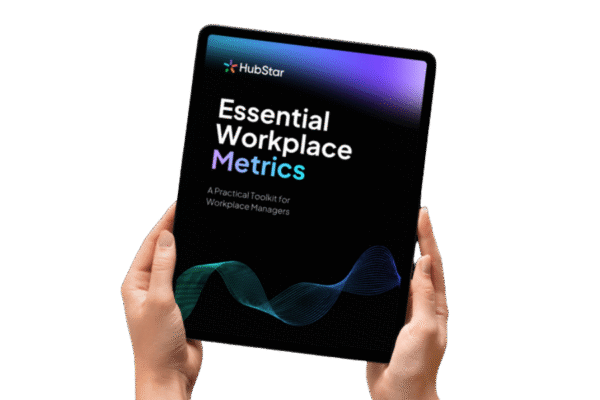
Essential Workplace Metrics: A Practical Toolkit for Workplace Managers
Most workplace managers have data coming out of their ears, but measuring the right metrics from it is another story. Download this guide for a practical toolkit with the right metrics to add to your roster.
2) Pinpoint your most underutilized spaces. Those are your optimization hot spots.
Data accuracy comes first as far as portfolio optimization is concerned. So once your data foundation is solid, you can start finding optimization opportunities.
Most workplace leaders have a sense of which spaces feel quiet, but as we all know well, a gut feeling won’t hold up in a board meeting when you’re proposing to consolidate two floors or exit a lease.
Comparative utilization analysis is a must-have here because it tells you exactly how much a space is underused relative to the rest of the portfolio. A floor that looks busy over a month might actually be empty twice a week, for example.
Spaces that are consistently underused can be repurposed, consolidated or temporarily closed, all of which drive OPEX savings without degrading workplace experience.
Key actions for finding portfolio optimization opportunities:
- Track utilization comparatively across neighborhoods, zones, floors and even buildings. Compare utilization by space type and time frame
- Set utilization rate thresholds and set up automated alerts on your workplace analytics software so you’ll get notified when spaces fall under them
- Repurpose, consolidate or temporarily close the most underused areas. This can generate thousands in OPEX savings
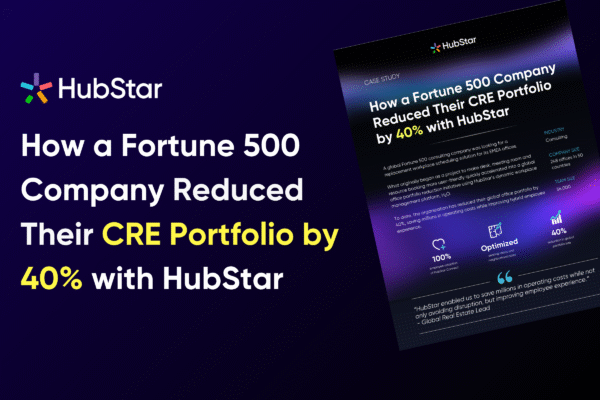
How a Fortune 500 Company Reduced Their CRE Portfolio By 40% with HubStar
What started as replacing an outdated workplace scheduling tool accelerated into a global office portfolio reduction initiative, using HubStar’s dynamic workplace management platform, H₂O.
3) Manage spaces and occupancy dynamically to match the ways employees use them.
Static office configurations designed for maximum capacity are so 2019. Dynamic space management allows organizations to adapt their spaces to fluctuating attendance patterns.
Organizations implementing dynamic space management have achieved 65% increases in space utilization rates and reduced their real estate portfolios by 30-40% on average, translating to millions in annual savings.
Key actions for dynamic occupancy planning:
- Implement desk sharing ratios and neighborhoods that flex as attendance fluctuates
- Replace the manual floorplan edits and spreadsheets with a dynamic space management tool that automates the time-consuming manual work for space and occupancy planners
- Model the impact of portfolio changes before pulling the trigger. Whether it’s increasing space sharing ratios or a new hybrid policy, modeling and visualizing the impact of the change helps you avoid disruptions to workplace experience and costs down the line that may not be immediately apparent.
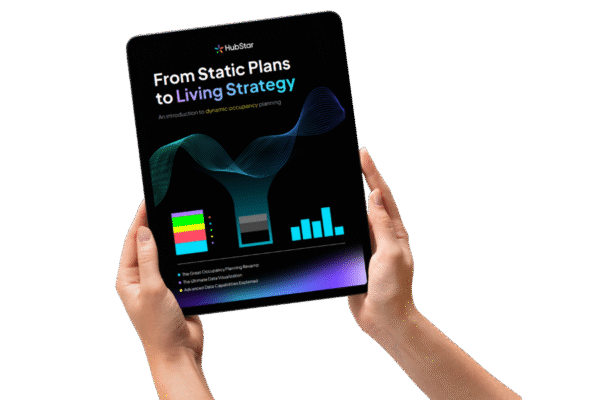
Dynamic Occupancy Guide: From Static Plans to Living Strategy
Traditional approaches to occupancy and space planning no longer work. Download this guide for an introduction to dynamic occupancy and learn how to transform static plans to living strategy.
4) Treat the workplace the same way software companies treat a product.
Think about how the best software products like Slack grow their user base. They don’t mandate that people use them. They make the product good enough that people choose it, keep using it and then tell their friends and colleagues.
The same logic applies directly to the office. Your employees are the users. The commute is the subscription price. If the product isn’t delivering enough value to justify that cost, attendance will drop regardless of how many all-hands emails get sent about it. And an empty, underattended office is one of the fastest ways to make a cost-effective real estate strategy fail. Underutilized space is expensive space.
The Product-Led Growth model, which has driven some of tech’s biggest commercial success stories, maps almost perfectly onto the challenge CRE teams face in 2026 – getting people to come into the office, keep coming back and tell colleagues about it.
Running the workplace this way changes how you think about spending. Instead of cutting costs across the board, you invest where the data shows employees actually engage and cut back where they don’t. That’s what makes it one of the most cost-effective corporate real estate approaches available right now.
Key actions for applying the product-led growth model to the workplace:
- Measure how employees interact with the workplace in the same way software companies measure user behavior on an app
- Use this data to constantly improve the workplace experience, and ask yourself if employees would choose it over working remotely. The answer should always be yes
- Apply the four steps of acquire (get people into the office of their own free will), activate (provide immediate value), retain (make people want to come back) and refer (make the experience so great everyone tells their colleagues and friends
What CRE Leaders Can Learn About Workplace Strategy from Slack
Here are more specifics on how you can apply the PLG model behind's Slack's explosive success to your own workplace and shift the CRE role from a cost-reducer to an experience-creator.

Jackie Towers
Share this post
You might also like