Designing for Demand, Planning for People: Three key themes from IFMA World Workplace 2027
Explore the top 3 themes discussed at IFMA World Workplace 2026 and what it means for your 2027 workplace decision planning.

Giles Ansley
With refreshingly cool weather, palm-lined streets and Disneyland just around the corner, Anaheim provided the perfect backdrop for IFMA World Workplace 2026.
A recurring theme throughout the conference was the shift from managing buildings to designing experiences. Increasingly, the measure of a successful workplace is not simply how efficiently it operates, but how effectively it serves the people who use it.
Ironically, one of the conference’s most practical lessons in user experience and peak demand management wasn’t on the educational agenda – it was in the lunch lines. A reminder that capacity means little if it isn’t available when and where people need it.
For HubStar, these themes point to a practical challenge for 2027: understanding what space the business needs, anticipating how that demand could change and creating a workplace that delivers value to its users.
Here are the three takeaways we’ll carry into the year ahead.
1. Attendance does not tell you whether the workplace works
An office could average 50% occupancy and still leave employees struggling to find a meeting room on Tuesday. The headline number hides the question that matters: does the organization have the right space available when people need it?
Peak demand, dwell time, and the difference between booked and occupied space reveal more than an attendance total. A frequently reserved desk may sit empty; an apparently underused floor may be essential to one team’s busiest day.
Badge and Wi-Fi data help establish patterns of workplace attendance. Booking data reveals intended demand, while occupancy sensors provide a more granular understanding of how individual spaces are actually used.
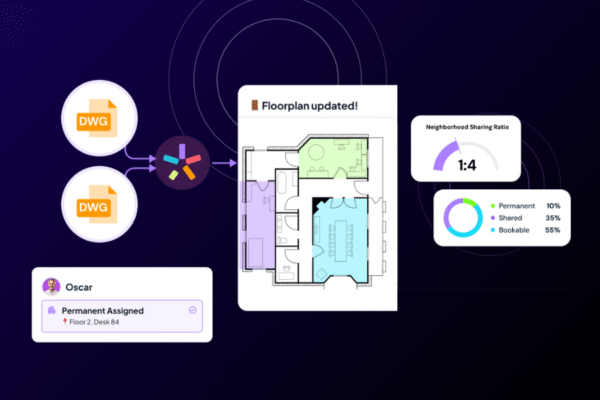
By connecting these data sources, HubStar helps workplace leaders move beyond measuring attendance to understanding whether their workplace has the right capacity, configuration and mix of spaces to support the business.
Connect your data sources with HubStar Hub
Centralize your hybrid data, optimize your floor plans with machine learning, automate hybrid space design changes, right-size neighborhoods and manage seating ratios.
2. Plan for the next change before committing to space
Teams grow, hybrid policies shift and leases approach renewal, but annual planning cycles struggle to keep pace. Understanding how space is used today is only half the challenge —the real opportunity lies in anticipating what the business will need tomorrow.
HubStar’s AI-powered Dynamic Planning brings demand, allocation and actual attendance into a shared view, helping workplace and corporate real estate leaders test questions such as:
- What if attendance increases by 20%?
- Could two departments share a neighborhood while accommodating peak demand?
- Can we consolidate a floor and still accommodate growth?
By modeling future demand, evaluating seat-sharing strategies and comparing allocation scenarios, workplace leaders can identify opportunities to optimize their footprint while retaining control over planning assumptions and decisions.
Rather than reacting to organizational change, workplace teams can anticipate it.
That creates a clearer conversation with Finance about space requirements, potential savings and operational trade-offs before making significant real estate commitments.
3. Space efficiency and employee experience belong in the same plan
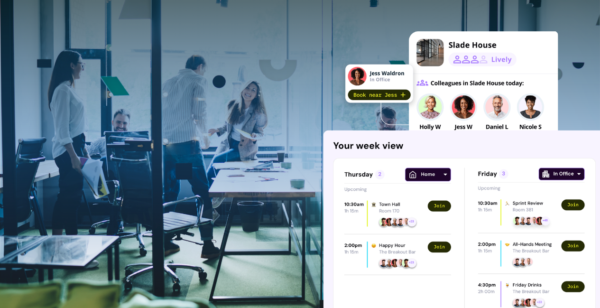
One message resonated throughout the educational sessions in Anaheim: employees are not simply occupants — they are users. That distinction shifts the workplace from a physical asset to manage, to a service to deliver.
Real estate efficiency and employee experience need not be competing priorities. A smaller, better-configured workplace can deliver greater value by making it easier for employees to find the right space, connect with colleagues and work effectively.
At Pay.UK, the organization responsible for operating the UK’s core retail payment infrastructure, HubStar supported a move to a smaller office that reduced its real estate portfolio by 40% while accommodating the same headcount and creating more opportunities for cross-team collaboration.
Proof that less space doesn’t have to mean less value.
How HubStar Helped Pay.UK Reduce its Portfolio by 40%
Read how Pay.UK increased workplace collaboration and knowledge sharing with HubStar
What it means for your 2027 planning
The future of workplace management is not about collecting more data. It’s about making better decisions with it.
The opportunity for 2027 is to design for demand, plan for change and put people at the center of every space decision.
Understand how your workplace performs today. Anticipate what it will need tomorrow. Create an environment that makes the commute worthwhile.
See you at World Workplace 2027 – hopefully with slightly shorter lunch lines!
Missed us in Anaheim?
Book a demo to discover how HubStar can help you turn workplace intelligence into better space decisions in 2027.
Giles Ansley
Share this post