From Managing Space to Making Decisions: Top Takeaways from WorkX San Francisco
In this post, HubStar's Director of Enterprise Sales Andy Bagby reflects on the conversation topics that kept coming up at WorkX San Francisco earlier this month, and what's holding workplace and CRE leaders back from making the right decisions.

Andy Bagby

My colleague Navin and I spent August 10–12 at WorkX in San Francisco, talking with real estate and workplace leaders about how the role of the workplace is evolving.
One theme kept surfacing: the job is changing.
We’ve been seeing this shift for some time. Workplace teams are moving from managing space, controlling cost and reporting what happened to making decisions about what happens next. The data is there, the questions from leadership are getting harder, and the expectation is increasingly to use what you know to help the business decide what to do tomorrow.
The conversations at WorkX reinforced for me that the industry recognizes the shift, but the path to execution still seems unclear, and hesitation persists. Why is that?
Here are four things that stood out to me.
1. Start With Why, Not How
For years, workplace conversations centered on how: how do we book desks, assign rooms, report occupancy? Increasingly, the more important question is why.
Why are we consolidating this floor? Why renew this lease? Why invest here and not there? What happens if we don’t?
Starting with why defines the outcome, shapes the plan, and surfaces a path to success. Too often, teams jump straight to the how because it feels tangible. But ‘how’ can quickly become overwhelming when you haven’t clearly defined why you’re doing something in the first place.
2. Workplace Data & The Good Problem to Have
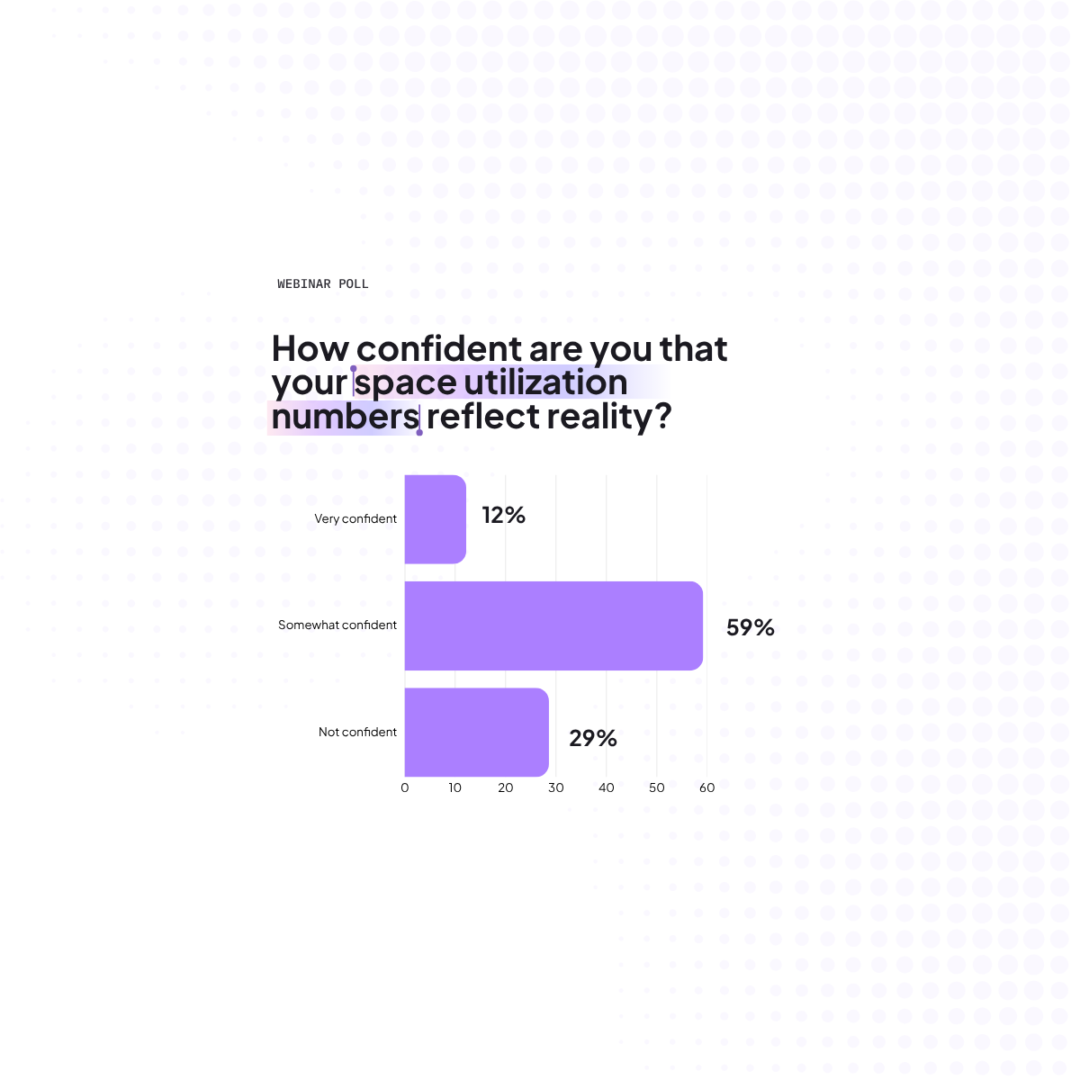
Workplace teams have more data than they’ve ever had. Sensors, badge swipes, booking systems, employee surveys…the list goes on.
Too much data is a good problem to have. The challenge is knowing where to start, what to trust, and how to turn all of it into business outcomes.
Is the outcome cost savings? Better employee experience? Expansion? A smarter portfolio decision? In reality, these outcomes often interact with each other.
Leadership is asking direct questions: How much space do we actually need? What’s this costing us? What should we do with this upcoming lease?
Can you answer them?
If the answer is no, that’s a problem that should be front and center with leadership. Several attendees told us they spend so much time pulling reports together that there’s barely any time left to make the decision the report was supposed to inform.
The value of data isn’t in having it. It’s in having the right answer when the business needs to make a decision.
Sifting through mountains of data shouldn’t be a job description.
3. The Cost and Consequences of Inaction
Teams are starting to weigh the cost of standing still against the cost of making a decision that might not be perfect. And that matters because the workplace has fundamentally changed.
For years, the office was the office. Real estate was infrastructure. The job was to manage it and control the cost.
The workplace is now a product. And products have outcomes.
A workplace decision can affect top talent, employee experience, collaboration, brand identity, portfolio costs and capital. The consequences of getting it wrong can compound quickly.
The shift from cost center to value creator is very real, but becoming a value creator requires more than managing costs. It requires understanding the outcomes the workplace is creating for the business.
You don’t need a perfect decision. You need a decision you can defend, measure and adjust.
What CRE Leaders Can Learn About Workplace Strategy from Slack
The workplace is now a product and a value creator instead of a cost center. Companies like Slack have already set the example and in this article, we look at the strategies workplace leaders can steal.

4. Legacy Technology Is Holding the New Job Back
HR, real estate, workplace, facilities management and IT are still largely operating in their own lanes. Each team has data and technology, but almost nobody has one central picture of what’s actually happening across the portfolio.
Much of today’s workplace technology was designed for a more static model, when the office ran on fixed headcounts and static floor plans. The workplace has changed dramatically; the technology supporting it hasn’t kept pace.
Organizations have built an impressive collection of workplace technologies. What they haven’t built is a central operating system for decision-making.
Connecting the dots still takes serious manual effort, slowing teams down when leadership wants answers fast.
Technology should support the strategy. Workplace leaders need to establish what they want to achieve first, then use technology to measure progress, pressure test assumptions, surface insights and inform what comes next.
The next step is moving beyond disconnected systems toward a unified workplace operating picture, so leaders can spend less time compiling reports and more time making decisions.
Where I Think This Leaves Us
Anne Lamott’s Bird by Bird is about writing, creativity and taking on big projects one piece at a time. There’s a great anecdote about her brother putting off a school report about birds. He waited until the last minute, became overwhelmed, and wondered how he’d ever get it done. His father put his arm around him and said, “Bird by bird, buddy. Just take it bird by bird.”
You don’t have to solve everything at once. Pick the question that matters. Establish the outcome. Use the data available to you. Make a decision. Then build from there.
That’s the opportunity I see for real estate and workplace teams right now: not just becoming better at managing the workplace, but becoming a bigger driver of business outcomes.
If you’re wrestling with these challenges, the opportunity to turn workplace data into business decisions is hiding in plain sight. There’s just too much noise to sift through. Shed it.
Bring your workplace data, technology and intelligence together and put it to work. That’s what HubStar is designed to do.
Turn workplace data into decisions with HubStar's dynamic workplace management platform
Get workplace data you can trust, a workplace experience that's worth the commute, always-on occupancy intelligence and occupancy planning processes that take minutes instead of weeks.
Andy Bagby
Share this post