How to Stop This Winter’s Flu Surge from Derailing Your Office Attendance Forecasts
To stop this winter’s flu surge from derailing your hybrid work strategy, make staying home easy for sick employees, plan for volatile weeks with attendance ranges and leading indicators like booking cancellations and public health data, match cleaning and ventilation to real space utilization data, and give leadership the context to see a seasonal attendance dip as expected rather than as a hybrid policy failure.

Jackie Towers

It looks like this winter’s flu season is going to be a bad one.
US flu hospital admissions rose by 27% the last week of October, the highest rise in admissions for this time of the year since 2010. In the UK, last week’s emergency department attendances for flu-like illnesses were above seasonally expected levels.
This year, flu season is coinciding with even more contested return-to-office mandates. Asking employees to spend more time in the office during a worse-than-usual cold and flu season (from what we’ve seen so far) doesn’t align well with health and safety.
If you’re a workplace leader trying to get attendance more predictable, the winter sniffles and snuffles are about to make that a lot more complicated. If you’re walking into the boardroom presenting attendance levels and/or defending a new hybrid work policy, winter fluctuations might prompt some questions.
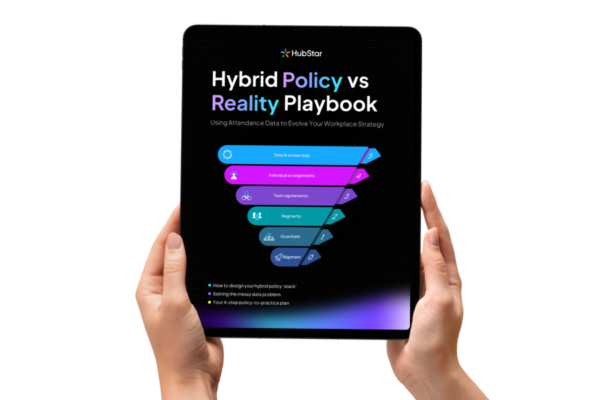
Hybrid Policy vs Reality Playbook
If your hybrid policy is built on leadership assumptions instead of real attendance data, it's going to fail. Download this playbook to start getting the data you need to create realistic policies and take them from policy to organizational practice.
Why a worse flu season might break your attendance forecasts
Ultimately, it’s in everyone’s best interest to see attendance levels dip this winter, because no one wants employees coming into the office out of presenteeism when they’re coughing up a lung.
But this presents extra logistical challenges if employees are booking a desk and not turning up.
And since illness tends to spread through teams who sit close to each other when they’re in the office, absences will probably come in clusters. If someone in the C-suite is peering closely at attendance by team, this might raise some questions and unfair singling out for “policy non-compliance”.
Throw in the constant stream of bugs from having young children in school, needing extra work from home days to care for those young children, and your attendance data starts looking like a seismic event.
Here’s how to handle everything smoothly and explain attendance fluctuations to the C-suite.
Make staying home the easy choice
Everyone should have learned by now that if you’re not feeling well, staying home isn’t just best for you, but the right thing to do for everyone else.
But workplace culture is a funny thing – if one manager consistently comes into work complaining about their cold, their entire team will probably follow suit.
That’s why it’s so critical to have clear, company-wide guidance on when to take the day off or work from home, without the fear of repercussions attached.
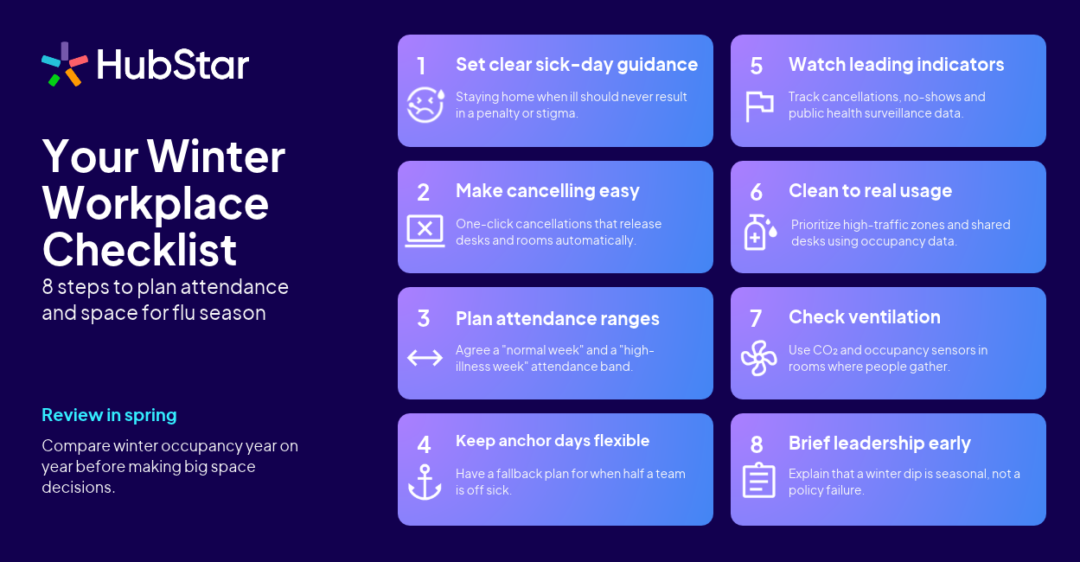
How to make staying home easier:
- One-click desk and room booking cancellations that free up space automatically
- Hybrid tools that make switching to working from home simple, e.g. switching to a remote meeting
- Having the right A/V equipment in meeting rooms for hybrid calls, and making that information available to employees when they book
Plan for volatile winter attendance weeks
Chances are you won’t get a week of normal attendance when there’s “something going round” the office. Looking back on yearly attendance data without any context might spark a fact-finding mission where there doesn’t need to be one.
How to plan for all-over-the-place attendance weeks:
- If you’re working to attendance targets, scrap them for an attendance range during high-absence weeks
- Proactively keep an eye on leading indicators that may signal wonky attendance weeks, like increased booking cancellations and weekly public health data like UKHSA and CDC FluView
- If you have big CRE portfolio decisions like consolidating floors or lease renewals, don’t make decisions off winter data alone
Prevent further absences by matching cleaning and ventilation to real usage
Here’s where all the learnings from COVID-19 get reapplied. Match them with accurate space utilization data from across floors, neighborhoods and rooms for even more illness prevention, plus cost and energy savings, since you’re focusing FM teams’ time and effort on the areas that need it most.
How to align cleaning schedules and space utilization data:
- Prioritize areas with the highest daily average utilization rates, like two-person meeting pods and hot desking zones
- Use occupancy sensors to pinpoint which meeting rooms are busiest, and install CO2 sensors to make sure air quality isn’t falling short
- During the sneeziest weeks, move people into zones with lower utilization instead of packing people into one floor
A seasonal dip because of illness doesn’t mean your hybrid work policy is failing. But without providing the right context, leadership may think it does.
HubStar helps keep your hybrid strategy on track, no matter what's going around the office
See real space utilization data across floors, neighborhoods and meeting rooms, understand seasonal patterns and get actionable optimization tips.

Jackie Towers
Share this post