Workplace demand forecasting
How Pinterest Forecasts Workplace Demand
In this excerpt from HubStar's Workplace Visionaries podcast, Brian Huber, Pinterest's Workplace Planning Lead, shares how he forecasts employee demand to build offices around the ways employees actually work.

Jackie Towers
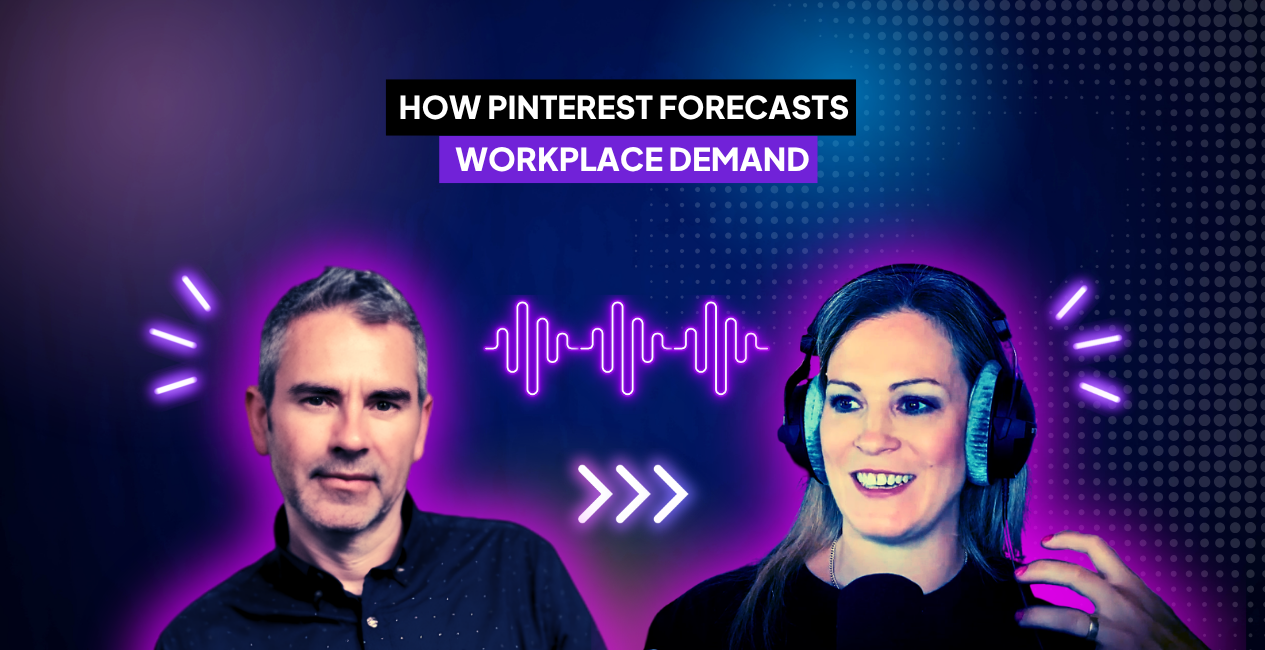
In episode 7 of Workplace Visionaries, Jane sat down with Brian Huber, Pinterest’s Workplace Planning Lead, about his career running corporate real estate and occupancy planning for nearly 12 years at Salesforce, followed by five years and counting at Pinterest. In this podcast excerpt, Brian and Jane get in to the challenges and opportunities of forecasting workplace demand, and Brian shares how he does it at Pinterest, which doesn’t mandate office attendance at all.
Get more of Brian's workplace demand forecasting tips
Listen to the full episode for more of Brian's best practices for forecasting demand, how he's shifted Pinterest offices from assigned to flexible neighborhoods and the math behind it, and so much more.
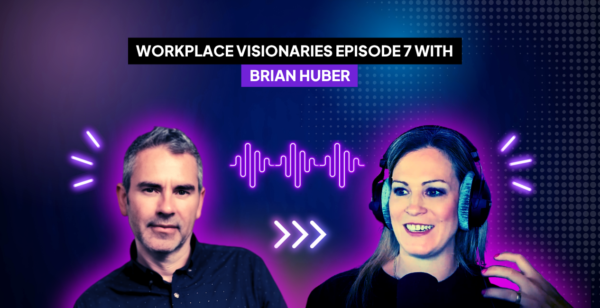
Brian:
One of the biggest changes with our new workplace strategy was instead of just looking at headcount, we started to focus on demand. We looked at how people are actually using the office and designed for them, not just the population headcount. The way people were using offices had started to change, and wasn’t just about day-to-day work, but more about hosting on-sites and events. So how do you build an office that supports that kind of work? We had to take that full big picture of workplace demand — all the different people using the office — and design for that instead of just the local population going to their desk and to meetings.That was the huge shift, and how I built our demand forecasting calculator. Given metrics, attendance rates, guest rates, all this demand — what do we need to program the office for? That’s where we are now.
Jane:
I do think demand modeling is interesting to geek out on. It’s something we’ve been working on at HubStar with our Dynamic Planning solution, not least because demand modeling in many ways has never really worked. It’s always been really hard, and now it’s pretty much impossible in the old way — the rigmarole of going business unit by business unit doing forecasts, often manual, often offline, based on headcount, which is not the best proxy anymore. That took too long even before hybrid work happened en masse. It seems fairly broken now.
Brian:
A lot of it was the math behind creating a demand model that would vary and change a lot. How do you create a program to support all of that change while knowing you don’t have great data? When you look at basic headcount growth projections and then talk to business units, they always say we’re going to hire this many people. When you talk to HR, they say “we have this headcount”, then you talk to finance, and they say the budget’s only approved for a smaller headcount. So what’s the real answer?
"We looked at the three busiest days in the office, regardless of the day of week, and calculated demand at the 80th percentile."
Brian Huber
Workplace Planning Lead @ Pinterest
And now add on: when you talk to any HR function posting a job, 99% of the time it’s not just “this role, in San Francisco”. They’ll list ten different cities in ten different locations. So maybe that team is hiring 25 people, but you have no idea where those 25 people will end up. So there’s this gray area where we have numbers, but we know they’re not good numbers from the start. When we built the demand model, we had to create a formula that captures all that noise and still lets us absorb the changes.
Another thing I looked at specifically was the typical attendance pattern. For us, that tends to be three days a week in office, so when you look at an office you see everyone’s bell curve of Monday and Friday being really quiet, and Tuesday, Wednesday and Thursday being busy, although that varies by location. Some locations have Monday as the busiest day. So we looked at the three busiest days in the office, regardless of the day of week, and calculated demand at the 80th percentile. By trying to capture the busier days, we’re programming and supporting a one-off day with a massive event. But we can’t build offices to support three days a year, that’s not practical. So we created a bigger envelope for demand, but not the extreme.
Something we’ve learned over the last couple of years is that headcount growth has a much smaller impact on office utilization than actual changes in attendance. If you only come in 30% of the time, and hire 100 people, that’s still very few people coming in. But if attendance goes from 25% to 50%, you now have a mass influx in workplace demand. So that’s the trick — understanding how people will use spaces in the future and predicting specific behavior changes. This is much tougher, because people aren’t easy to predict.
"Something we've learned over the last couple of years is that headcount growth has a much smaller impact on office utilization than actual changes in attendance."
Brian Huber
Workplace Planning Lead @ Pinterest
Jane:
Yeah, it really is. We just weren’t giving it the same level of attention before the pandemic. Space planners have a completely different challenge now, because dialing up headcount doesn’t translate into attendance. We’ve been working on automated demand models where you can see demand modeled by team or building: who’s expected to come in, and then see how allocated space compares, whether that looks right, and then look at actuals. The thinking is: did what I thought would happen actually happen? What do I need to do about it? The scale of this is compounded by larger organizations with many offices with the big annual planning process. Most of that time that process is consumed by trying to model demand, and it could take three months of the year. By the time you’re done, there’s a new acquisition or something’s changed, and you start over. The change is being able to dynamically run a scenario again when something changes — not the big annual planning cycle.
Brian:
My world now is creating scenario models for the same site over and over, every quarter. And part of the change is it’s very site-by-site now. We need to look at offices individually because of different behaviors in different locations, including team culture. In Tokyo the way they use and view the office is very different than American cities, for example. Attendance patterns are very different. You can’t have a one-size-fits-all program now, because we’re creating flexible work sites and offices that require a more bespoke planning approach than before.
Get the full episode here
Get more of Brian's best practices for forecasting demand, how he's shifted Pinterest offices from assigned to flexible neighborhoods and the math behind it, and why deep tenure teaches you more than job hopping.
Jackie Towers
Share this post
You might also like: