5 Conundrums Keeping 300 Workplace Leaders Up At Night
Last Thursday June 4th, HubStar's Joe Harris and Paul Mundy hosted a session exploring the top takeaways from all 13 of our Workplace Connect roundtable dinners across 6 cities with over 300 workplace leaders in attendance. Here are 5 workplace conundrums keeping our 300 workplace leaders up at night and real solutions.

Jackie Towers
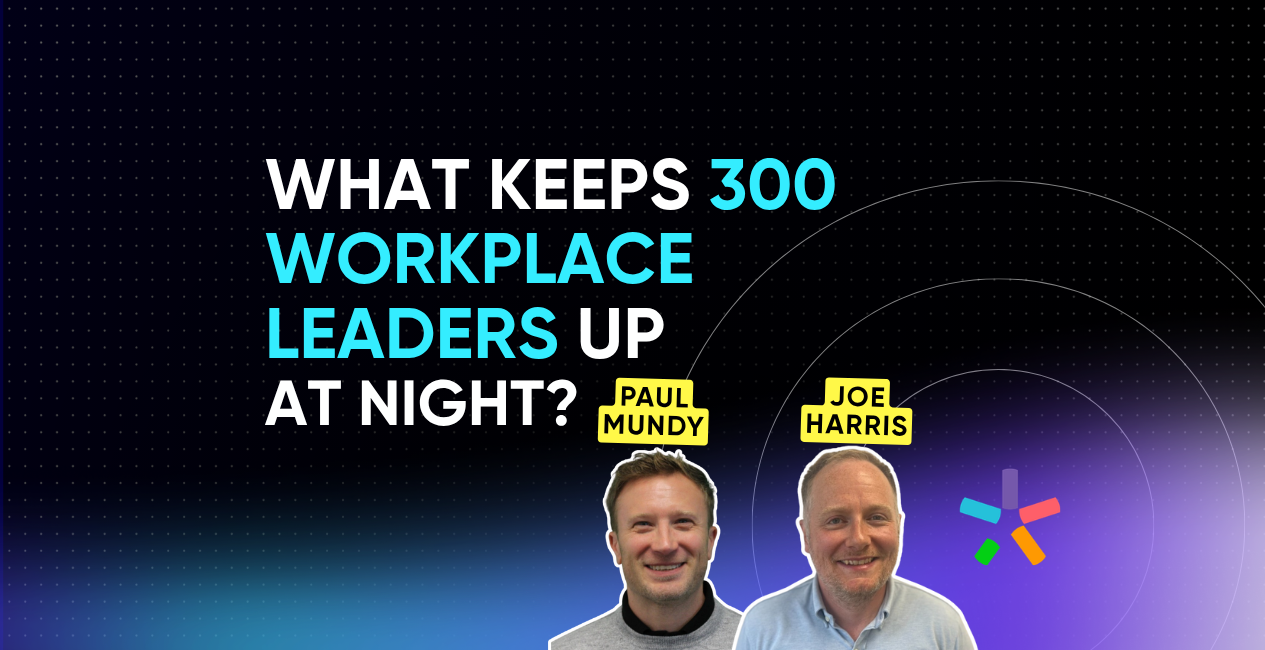
What’s keeping 300+ workplace leaders up at night? HubStar’s Joe Harris and Paul Mundy hosted a session on the key takeaways from 13 private Workplace Connect roundtable dinners with 300+ workplace leaders across six cities.
Here are the top five things keeping workplace leaders up at night and solutions in the form of real examples of how attendees are solving these challenges at their own organizations.
Watch the full recording here
Get even more takeaways, audience polls and solutions to workplace leaders' most pressing challenges in the full webinar recording.

Workplace Conundrum #1) Workplace leaders are the ones who have to enforce RTO mandates they don’t agree with.
The solution: Have leadership practice what they preach. If the new mandate says employees need to be in four days a week, have leadership come in five days.
It’s tough to change leadership’s mind once they get an idea in their head, but at least there won’t be any perceptions of unfairness a la Starbucks’ CEO who continued working from home after forcing everyone back in. Another bonus is that younger generations will now get more exposure to leadership and mentorship opportunities whenever they decide to come in, fulfilling a key workplace need of theirs.
The mandates versus magnets debate is perhaps the number one conundrum that had our attendees counting sheep.
But even if Home Depot, Target, the California government and the Canadian government have placed themselves on the mandates side of the spectrum, that doesn’t mean everyone is doing the same or should be.
Similarly, the attendees across 13 Workplace Connect roundtables reported a lot of variability about where their organizations fell on the RTO mandate spectrum, from employees having complete autonomy over their schedules to hardline four or five days a week mandates.
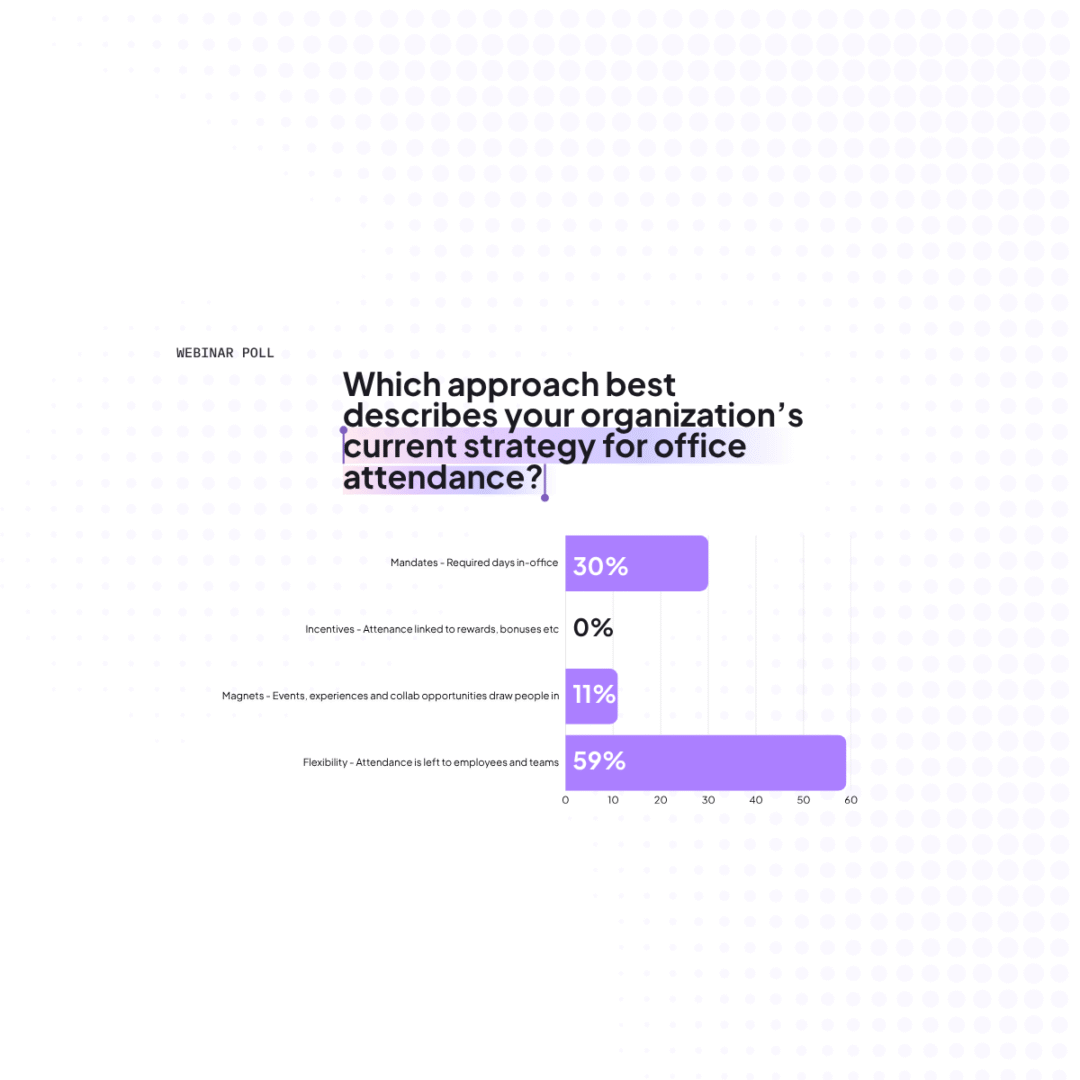
Interestingly, most of last week’s webinar attendees didn’t fall on the mandates or magnets side of the spectrum, but somewhere in the middle with teams and individuals given the flexibility to decide on their own office attendance.
Flexibility varied by city too, with New York City falling on the harder enforcement end of the spectrum, linking badge swipes to performance.
London fell somewhere in the middle, with workplace leaders framing mandates as guidance rather than strict policies.
San Francisco was the most flexible, with attendees prioritizing people-centric workplaces and new experiences to drive attendance rather than mandates.
But the one common thread across all 13 roundtables was the struggle of having little control over mandates once leadership has made up their minds, but being stuck with the arduous task of enforcing it.
Joe brought up the example of Nationwide bank in the UK, which went from remote-first to 40% in-office hybrid after a CEO change in 2023. Another attendee said their organization’s investors asked for stricter mandates after seeing empty seats during an office visit.
Workplace conundrum #2) We still can’t measure productivity and workplace experience.
Solution: Simplify the whole thing by polling global employees at a regular cadence. The question is just “Are you happy?” and the answer is either yes or no. Looking at increases and decreases (anonymously of course) across offices and regions helps you extrapolate what could be working (more flexibility) and what’s not (less flexibility).
Another conundrum that has workplace leaders switching on the lamp and reaching for the giant novel at 3 AM was the transition from cost per square foot to experience per person and how the heck to measure it.
No matter what leadership says about forced office attendance driving productivity, there’s still no universally accepted way to measure it, or distinguish it from other concepts like team performance. What really matters is understanding how things like workplace flexibility, space configuration and office amenities impact wellbeing, perceptions of experience and the ability to do their best work.
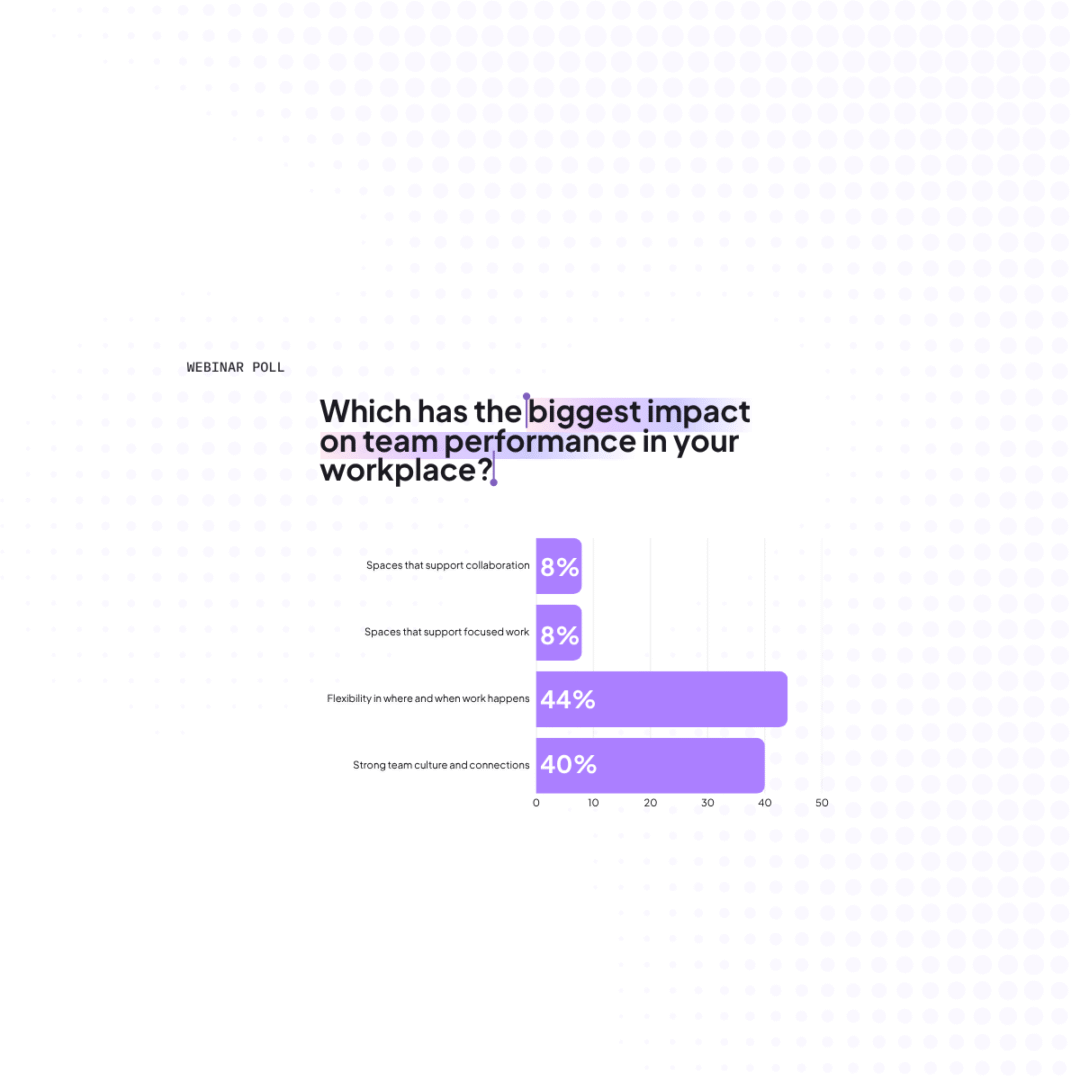
Our webinar attendees felt that flexibility had the biggest impact on team performance, which spaces for individual focus and team collaboration ranking lower than we expected.
Workplace Conundrum #3) HR and CRE speak different languages and it’s tough to get anything done.
The solution: Combine CRE/Property, workplace/HR, IT and Operations into one group that’s responsible for everything workplace experience. That combines place, people and policy with the teams that can execute everything.
The question of who’s responsible for what has definitely had our 300 workplace leaders reaching for the midnight Coco Pops and milk over the last two years.
This workplace issue is a case of job responsibilities changing more in a few years than they’ve done over decades, but cross-functional collaboration structures lagging behind.
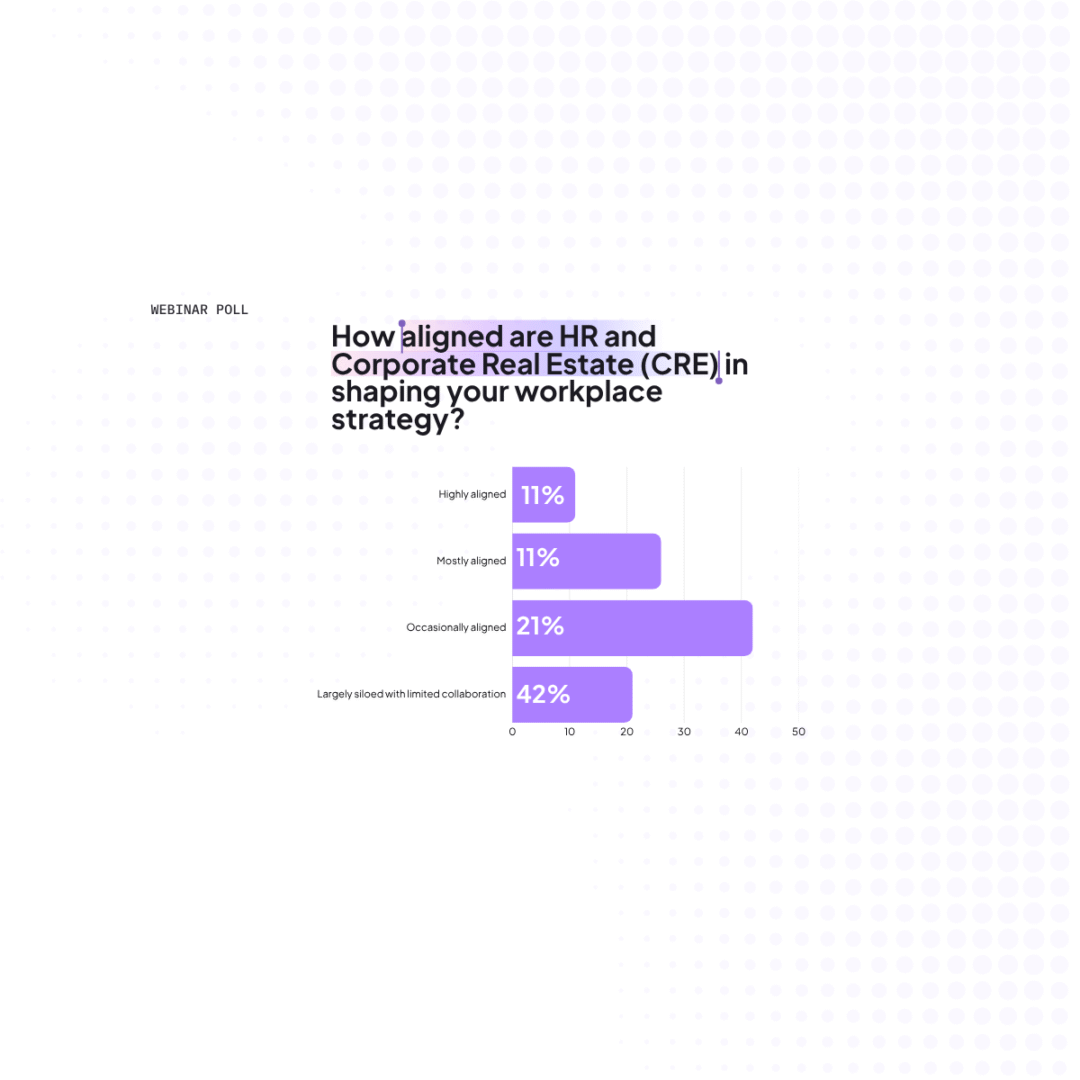
This problem was mirrored in our webinar attendees, with only 11% reporting their HR and CRE teams are highly aligned.
Even if this problem is an understandable one, its impact prevents workplace improvements.
Workplace experience is now a cumulative combination of place (CRE’s responsibility), people (HR) and policy (HR and leadership), but if these groups don’t work together effectively it’s a death by committee situation and the right improvements don’t get made.
Workplace Conundrum #4) We can’t seem to get a certain age group in the office, or if we do, they complain they’re not getting enough out of the experience.
Solution: Create a campus concept with recent graduates and/or younger employees in the office, with a dedicated neighborhood for them to sit together, presentations and show and tell sessions from other departments and executives, and ability to propose changes to the leadership team.
The presence of four different generations in the workplace and the struggle of tailoring the workplace experience to all of them definitely had our 300 workplace leaders watching Gilmore Girls reruns at 4 AM.
Oh, and there’s soon to be five generations in the office when Gen Alpha reaches adulthood.
Some employees are now younger than the first iPhone (the theme of today is that we’re old).
The issue is that as far as hybrid work policies go, it’s basically impossible to create one that fits all four. Boomers want to be in the office all the time, Gen X and Millennials want more flexibility and Gen Z wants leadership exposure opportunities, but complains that no one’s in when they are, so what’s the point?
Workplace conundrum #5) Speaking to AI instead of typing has made some teams faster, but has annoyed people in the neighborhoods beside them.
The solution: Installing more privacy booths and adding soundproofing material around individual desks prevents noise from carrying.
AI hasn’t overhauled the workplace like some people predicted, but it’s created some new workplace complexities, which are probably enough to keep some of our 300 workplace leaders staring at the ceiling running every embarrassing thing they’ve said or done since age 11 on a loop until 2 AM.
Back when we kicked off the first-ever Workplace Connect roundtable in July 2024, around half of attendees had AI banned at their organizations.
Fast forward to today, when 26% of employees polled by Gallup use AI at least a few times a week at work.
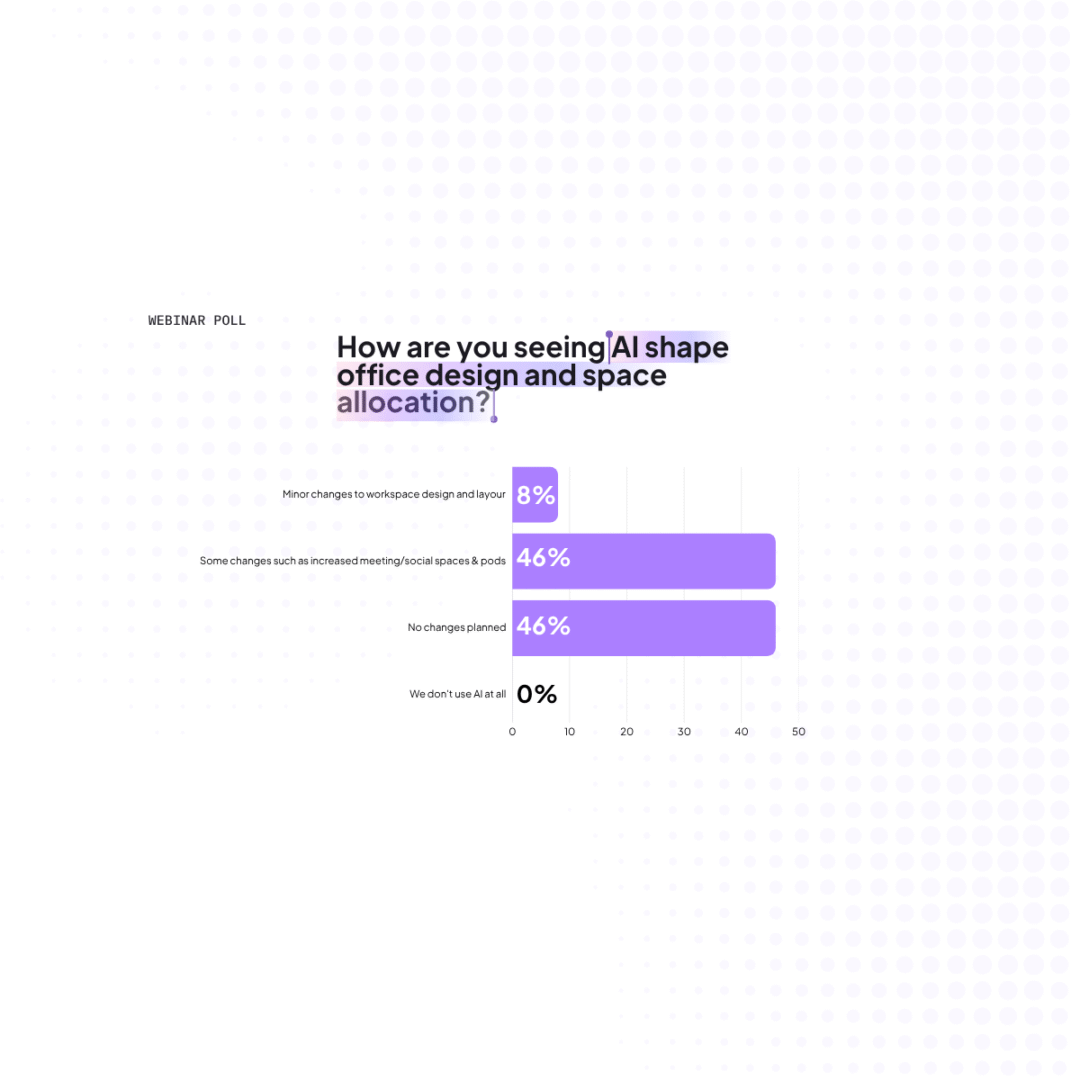
Our webinar attendees found themselves in roughly the same boat, with a split between no AI-induced workplace changes and some fairly minor ones, a few reporting more major changes, and absolutely none reporting they don’t use AI at all.
Watch the full recording for even more insomnia starters and their solutions!
Get even more takeaways, audience polls and solutions to workplace leaders' most pressing challenges, including the supply shortage of quality office space, in the full recording.
Jackie Towers
Share this post