From workplace efficiency to effectiveness
How to Start Measuring Workplace Effectiveness
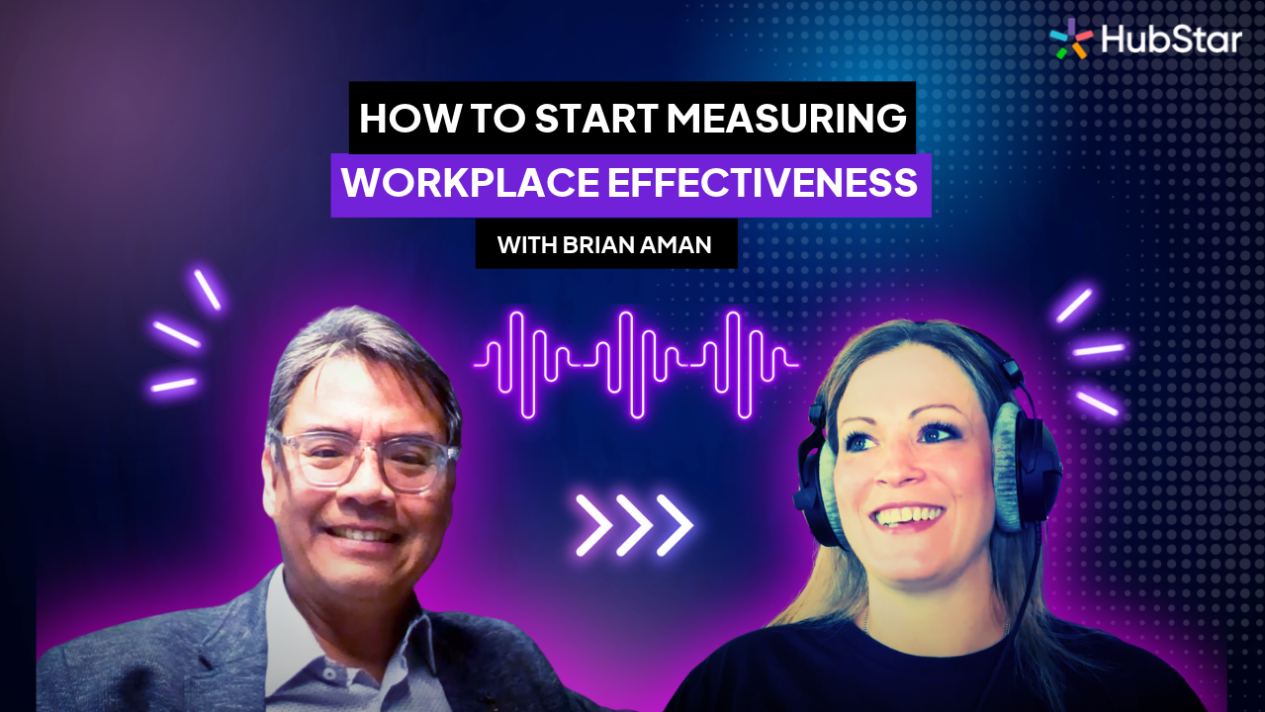
Workplace effectiveness measures whether office space supports the work people come in to do, but most workplace metrics only measure efficiency. Brian Aman, Workplace Strategy and CRE Transformation Lead at Rogers Canada, chatted with host Jane Young on HubStar's Workplace Visionaries podcast about how to start measuring workplace effectiveness. Based on this episode, we've put together three steps: layering data sources, matching work-activity signals to where the work is being done, and treating the workplace as a product you keep adjusting.

Jackie Towers
“To me, effectiveness is simple. Did the workplace support the individual or the team with the right type of space, based on the function they came into the office to do? That's not an easy thing to measure.”
Brian Aman
Workplace Strategy & CRE Transformation Leader @ Rogers
Raise your hand if you can find out how many people badged into the office last Tuesday without too much difficulty. Now raise your hand if you can definitely say whether or not the office helped those Tuesday badgers get their work done.
On a recent episode of Workplace Visionaries, Jane Young spoke to Brian Aman, a workplace strategy and CRE transformation leader at Rogers, about every workplace leader’s current conundrum: measuring workplace effectiveness with a handful of outdated metrics.
What does workplace effectiveness actually mean?
“To me, effectiveness is simple,” Brian says. “Did the workplace support the individual or the team with the right type of space, based on the function they came into the office to do? That’s not an easy thing to measure.”
Most workplace leaders have reams of data, so data availability isn’t the problem. So what is?
“We have enough data,” Brian comments. “What we haven’t done is examine it, and that’s what I’m truly interested in.”
Today’s metrics only measure space fullness.
Days in office, badge counts, occupancy and utilization rates all measure workplace efficiency. They show how many people came in and how full a space was. None of them show whether the space supported the work people came in to do.
Utilization often stands in for effectiveness anyway. JLL’s Occupancy Benchmark describes it as the industry’s North Star metric, yet 92% of organizations still measure it with badge data, which stops providing insight at the front door.
Part of this lack of insight stems from office builds themselves. Most were built for an analog way of working. They were designed once, then left alone until the lease came up for renewal five or ten years later.
Measuring effectiveness means changing how the workplace is planned as well as how it’s measured. “You really have to throw the playbook out the door,” Brian says.
Want the full episode instead?
Get more of Brian's insight on why the old workplace operating system playbook is broken and what the new one should look like, plus how AI is changing office layouts, why policy isn't a workplace problem and even Brian's meeting prep tips.
The answer to this problem is nuanced. You need a wide combination of qualitative and quantitative workplace data sources to come anywhere close to understanding it.
The most perfect stack of metrics doesn’t exist yet. But making a start now will help you answer the most important question workplace leaders should be asking themselves: does our office improve the way people do their jobs?
Here’s how to get started.
1) Combine and layer data sources so each one adds context.
No single data source answers the effectiveness question. Brian estimates measuring utilization rate through Wi-Fi alone gets Rogers about 80% of the way to an accurate picture of how space is used. He’s experimented with adding the following data sources:
- Room booking data to show intent
- AV telemetry from video conferencing equipment to correlate intent with actual room usage
- Sensors built into smart lighting cover use of open plan spaces
Combined with Wi-Fi, he puts accuracy at 90–95%.
Segmenting the data adds more context. When Brian split Rogers’ mobility profiles by business unit, each unit had a distinctly different mix. The same was true for individual offices and provinces, so a single standard would suit none of them.
Observation and conversation aren’t quantitative data sources, but they still add context. That’s because data shows what’s happening, and people can explain why. Using AI to analyze the combined data, Brian has found that “the more context you give, the more insightful the output.”
Conventional data produces efficiency metrics, but context moves the analysis toward effectiveness.
5 Core Workplace Metrics & How to Use Them
From space utilization to employee sentiment, download this guide for a toolkit on data sources, which metrics to compare to each other and how to use them to build a better workplace.
2) Match data on which work people do to where they’re doing it.
Most workplace data describes where people are working. A reliable signal for which work people are doing in those spaces is harder to uncover. It mostly comes from surveys, which capture preferences but are prone to bias.
To fill that gap, Brian is testing whether Microsoft Graph data can infer collaboration from a Teams call, focus work from time in a spreadsheet and creative work from writing. Privacy is a real hurdle, so Rogers is piloting it internally with aggregated data.
You start getting a better idea of workplace effectiveness when you combine work activity and work setting signals.
For example, when Rogers’ utilization heat maps showed individual desks in heavy use, Brian walked the floor to check. At least half the people at those desks were on video calls in the open plan areas. On a utilization report, that looks like success. For someone nearby trying to concentrate, the work and the setting are badly matched.
“Isn’t it more important to understand whether our spaces are actually helping them hit their quarterly results?”
"I think in the future there will be ways to measure value more effectively, simply by tying use to work activity."
Brian Aman
Workplace Strategy & CRE Transformation Leader @ Rogers
3) Identify which parts of the workplace you can adapt when the data says you should.
Brian sees the workplace as a product. Building architecture and fit-out are fixed, while everything inside is adaptable and moves at different speeds, like the features of a piece of software. Furniture, technology, work patterns and people all change faster than a lease. He compares it to a laptop: “I don’t want to change my laptop every year, but I may get a better mouse.”
For the workplace, that means modular, plug-and-play settings that can be swapped when data shows part of a floor isn’t performing. Rogers is exploring furniture as a service in its vendor contracts for exactly this reason.
When the changeable parts of a workplace don’t evolve, underused spaces stay underused. Low utilization is often a sign that a space no longer supports the ways people used to work in it.
The aim is to recalibrate the workplace continuously as work evolves, instead of predicting the future, building it and leaving it until the next lease renewal is on CRE’s agenda.
Take Your Role from Cost Center to Value Creator
CRE is a value creator, not a necessary cost, but workplace operating systems didn't get the memo. Download this guide to steal tech's most profitable operating model and apply it to your workplace.
So if you’ve put these three steps into practice, and you have an idea of how effective your workplace is, now what?
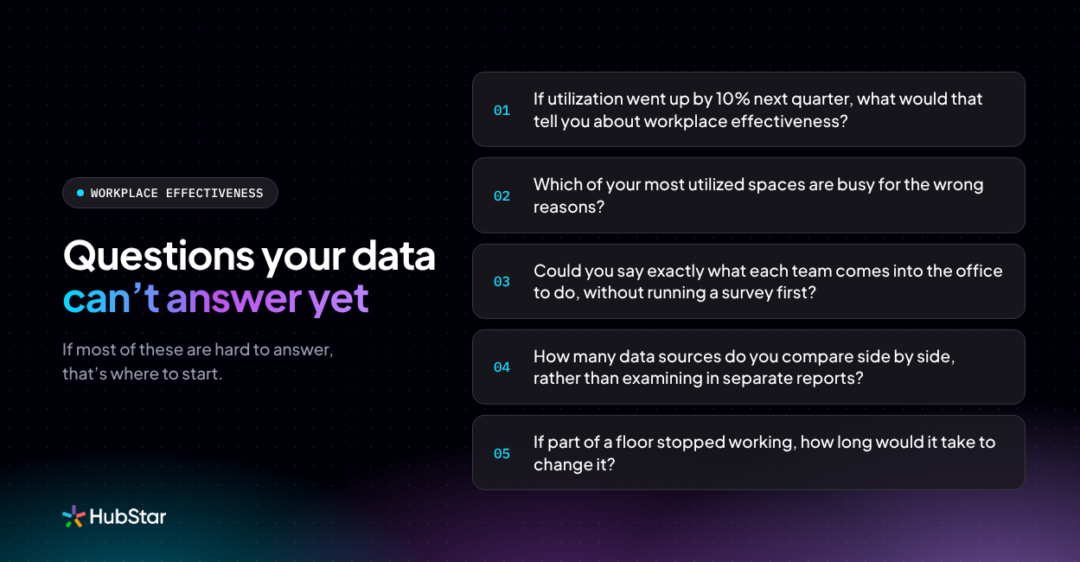
You can still start asking questions, even if your existing data can’t fully answer them. Here are a few:
- If utilization went up by 10% next quarter, what would that tell you about workplace effectiveness?
- Which of your most utilized spaces are busy for the wrong reasons?
- Could you say exactly what each team comes into the office to do, without running a survey first?
- How many data sources do you compare side by side, rather than examining in separate reports?
- If part of a floor stopped working, how long would it take to change it?
Data won’t make the decisions on its own. Brian’s advice is to “understand the problem, challenge it, add the human perspective, and have the conversations with stakeholders so we’re not just giving them a solution, but helping them understand a solution they themselves are informing, to create a better future.”
Jackie Towers
Share this post